This might be Universal’s most thrilling ride yet

Daftar Isi
Universal Studios Hollywood’s Fast & Furious Coaster Enters Soft Opening — But Riders Should Know the Fine Print
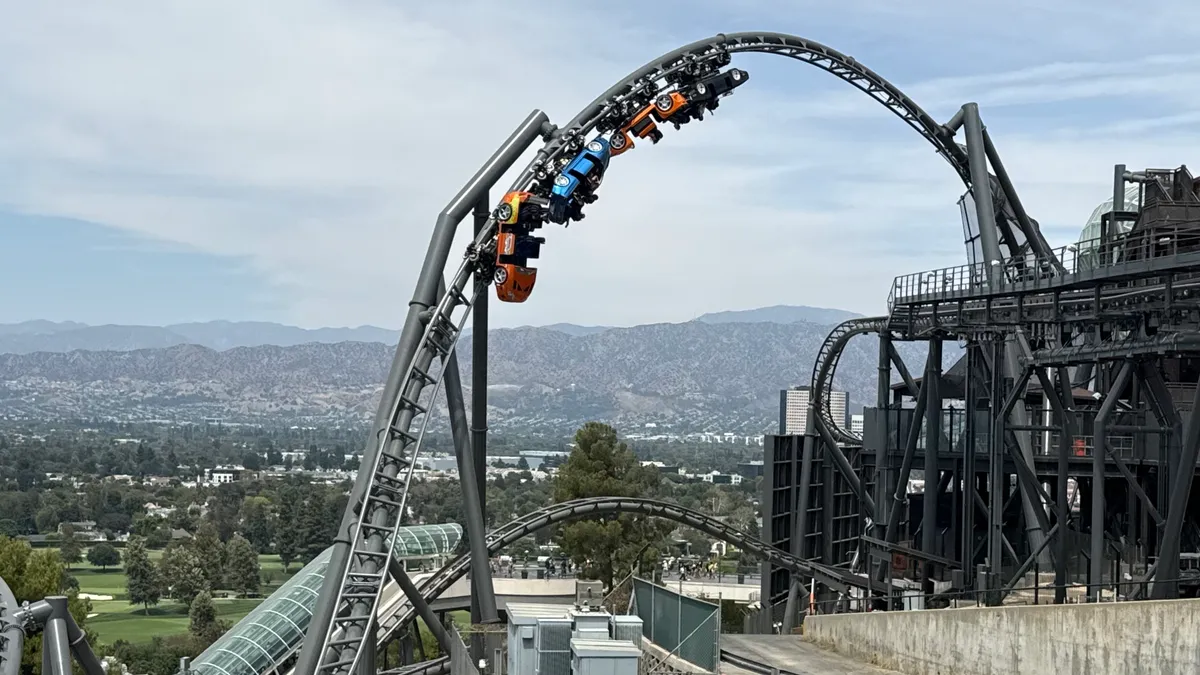
Cybersecarmor.com – For a quarter century since the original Fast and the Furious franchise burst onto cinema screens in 2001, fans have been limited to watching characters drift, spin, and barrel through streets from the safety of a theater seat. That limitation is now dissolving. Universal Studios Hollywood has begun quietly admitting guests onto its long-rumored Fast & Furious: Hollywood Drift roller coaster, placing them directly behind the wheel of a simulated muscle car hurtling down a hillside at speeds approaching 72 miles per hour.
The attraction, manufactured by Intamin, stretches across 4,100 feet of track carved into the slope between the park’s upper and lower parking lots. Along its length, riders encounter multiple inversions, full 360-degree rotations, and sustained lateral shifts that mimic the signature drifts of the film series. The elevated positioning also frames sweeping views of the surrounding San Fernando Valley, adding a scenic dimension that most coaster layouts simply do not offer.
A Ride Engineered for Disorientation
What distinguishes Hollywood Drift from conventional spinning coasters is its choreography. Rather than relying on passenger weight distribution to trigger rotation, each car is programmed to execute spins at precise points along the track, synchronized with an on-board audio track. The result, according to those who have already experienced it, is a sequence of backward motion, lateral swerves, and full rotations that arrive with cinematic timing.
“Every time, it’s like, ‘Oh, I want to go right back on that if I can,'” said Doug Perry, a Los Angeles-based annual passholder who has ridden the attraction multiple times. “It’s just such a unique experience, and it’s so fun.”
Perry, who also serves as social media manager and Pacific Southwest representative for American Coaster Enthusiasts — the organization that bills itself as the world’s largest club dedicated to ride enthusiasts — has logged more than 1,400 distinct coasters worldwide alongside his twin brother Derek. Their combined experience gives their assessments considerable weight within the coaster community.
The Vehicle Design Question
Universal’s creative team spent considerable time selecting which film vehicles would anchor the coaster’s trains. Jon Corfino, vice president of Creative at Universal Studios Hollywood, explained that the studio evaluated numerous cars from across the franchise before settling on four what he called “natural” icons. The goal was authenticity without forcing guests into a literal movie scene.
“We’re not trying to put you in the movie, but we paid an amazing amount of attention to the design of the vehicles,” Corfino said. “You see the engine on the front of the Charger that’s there, the width of the tires … all the seams, gas caps, tail lights, everything that’s there is very authentic.”
Guests queuing for the ride will encounter additional props and vehicles drawn from the films, along with QR codes that link to behind-the-scenes footage from the productions. Corfino framed this layering as an extension of what makes Universal Studios Hollywood distinct from other theme parks: it remains, at its core, a working motion picture studio.
“It kind of harkens us back to one of the things that Universal Studios Hollywood has that’s very unique. We’re an authentic motion picture studio,” he said. “It’s kind of taking you behind the scenes into the movies again.”
Soft Opening: What It Means for Travelers
Despite the excitement, the coaster’s current status warrants caution for visitors planning trips from out of state or abroad. A “soft opening” means the ride may be accessible on any given day, yet it can be shuttered without advance notice while Universal engineers work through operational refinements. There is no guaranteed operating schedule at this stage.
Complicating matters further, the park has been fielding noise complaints from neighboring residents over the volume of rider screams. Universal is implementing additional sound-reduction measures even though internal testing has confirmed the attraction operates within local sound ordinance limits. Perry, who tracks the ride’s development closely, offered straightforward advice to distant fans:
“Don’t expect it to be open and just hope that it is.”
Until an official opening date is announced, travelers should treat the coaster as a bonus rather than a planned itinerary item. Annual passholders with local access will naturally have the advantage of repeated attempts, while out-of-town visitors risk arriving to find the ride dark for the day.
Intensity, Calibrated
Corfino was careful to set expectations about physical toll. The ride delivers genuine adrenaline — sustained speed, rapid rotation, and lateral forces — but it is not designed to leave riders battered.
“There is no doubt that you are thrilled out of your mind, but you’re not going to feel like you’ve gone 15 rounds with Mike Tyson,” he said. “You will have gone really fast and you will spin out and you will be drifting, but you’re going to get out and you’re going to be OK.”
That calibration matters for a broad audience. The franchise’s fan base spans ages and physical comfort levels, and Universal appears to have aimed for a thrill that rewards repeat visits rather than punishing first-time riders.
Orlando’s Separate Build
Universal Orlando Resort is simultaneously constructing its own Fast & Furious coaster, though that project remains under construction and has not yet opened. Corfino confirmed the Orlando track will differ substantially from the Hollywood layout, meaning the two parks will offer distinct riding experiences under the same franchise umbrella. Fans who eventually visit both locations can expect different track geometries, different vehicle configurations, and different thematic pacing.
For now, the Hollywood version stands as the franchise’s first physical translation into a theme-park environment — a 25-year gap between cinema and coaster finally closed, albeit one that may require patience before it settles into regular park operations.
Related Reading
Frequently Asked Questions
What is This might be Universal s most?
This might be Universal s most is the main topic of this guide. The article explains the context, practical details, and next steps readers should understand.
Why does This might be Universal s most matter?
This might be Universal s most matters because readers are looking for a useful answer, not just a short summary. Good content should match search intent and help them decide what to do next.