
Inside the Korean hotel training humanoid robots with cameras on workers’ hands
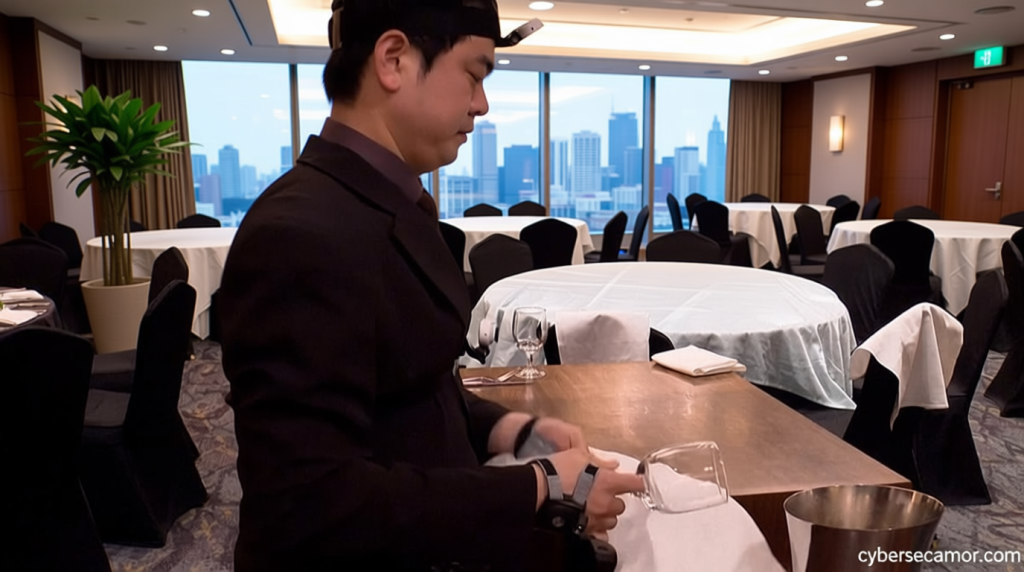
Korean Hotel Training Humanoid Robots with Hand Cameras
Inside the Korean hotel training humanoid – South Korea is leading the charge in equipping humanoid robots with the ability to perform tasks once handled by humans. At a luxury hotel in Seoul, staff members are using cameras attached to their hands to teach robots the precision of human dexterity. This initiative, part of broader efforts in “physical AI,” aims to blend machine efficiency with the adaptability of human labor. By capturing detailed movements, the project seeks to create robots capable of executing complex physical tasks in diverse environments, from hotels to factories and warehouses.
The Role of Human Motion in AI Development
David Park, a seasoned hospitality worker, is part of a monthly program where his hand movements are recorded by high-resolution cameras. These devices track not only the sequence of actions but also the subtle adjustments in force and positioning that define human craftsmanship. The data collected is used to refine AI models, allowing robots to replicate tasks like folding napkins or setting tables with greater accuracy. Park’s participation highlights how human expertise becomes the blueprint for robotic precision in service-oriented roles.
RLWRLD, the AI firm behind the project, emphasizes the importance of human movement in training robots. Their humanoid robots, with onboard cameras, are being taught to handle items such as cutlery and cups in simulated hotel settings. However, current systems still fall short of human performance in terms of speed and adaptability. While hotel staff complete a room cleanup in about 40 minutes, robots require several hours for the same task, underscoring the challenge of translating human motion into machine efficiency.
Expanding the Scope of AI Training
South Korea’s national strategy for AI robotics is not limited to hospitality. Data from logistics workers at CJ Group’s warehouses and employees of Lawson are also being integrated into the training process. These workers’ hand movements, as they organize food displays and handle goods, provide a broader dataset for AI development. The goal is to create versatile software that can be adapted across industries, including manufacturing and domestic settings, before it matures for widespread use.
The country’s advanced manufacturing base and skilled workforce give it a unique edge in physical AI. This initiative aligns with the government’s recent $33 million project to document the “instinctive know-how” of experienced technicians. By converting human expertise into machine-friendly data, South Korea aims to dominate the global AI robotics market. Hyemin Cho, RLWRLD’s business and strategy executive, highlights how hospitality serves as a critical training ground: “A robot folding napkins at Lotte Hotel wouldn’t achieve the precise folds expected of human service quality,” she notes, emphasizing the need for human-like adaptability in AI systems.
Major corporations in South Korea are also investing heavily in AI-powered robotics. Hyundai Motor plans to deploy Boston Dynamics’ humanoid robots in production lines by 2028, while Samsung Electronics aims to transform all manufacturing plants into AI-driven facilities by 2030. These ambitious goals reflect a growing trend in automation, where physical AI becomes a key component of industrial efficiency. The technology’s potential to reduce manual labor and enhance productivity is driving significant corporate and governmental support.
Despite the optimism surrounding these innovations, challenges remain. Engineers at RLWRLD are working to improve robotic hand dexterity by analyzing vast datasets of human action. The process involves not only recording movements but also understanding the context and intent behind them. As the technology evolves, it may one day enable robots to perform tasks with the finesse and speed of human workers, reshaping the future of labor across sectors. This effort underscores South Korea’s commitment to pioneering AI that bridges the gap between human skill and machine capability.

