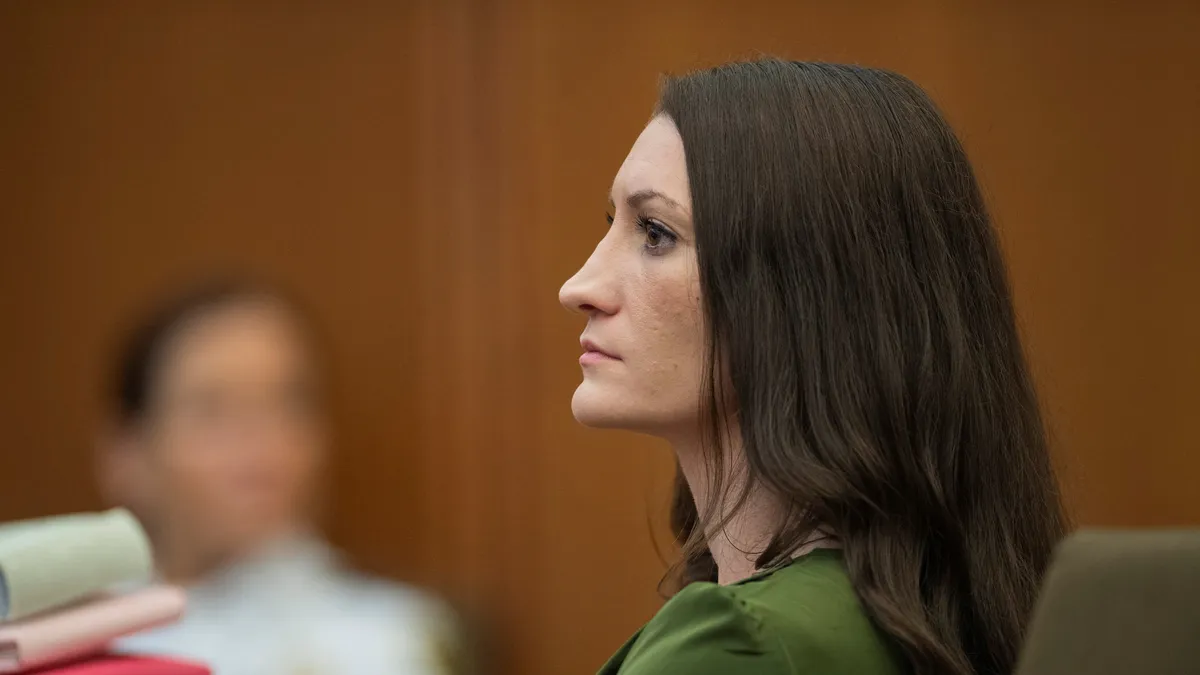
What could happen to Lindsay Clancy after trial verdict

Daftar Isi
Jury Deliberations Begin in Duxbury Triple-Murder Case as Sentencing Stakes Loom
Cybersecarmor.com – A Massachusetts jury has entered the deliberation room to weigh the fate of Lindsay Clancy, the 36-year-old mother accused of strangling her three young children in their Duxbury home in January 2023. After weeks of testimony from family members, friends, first responders, and medical professionals, both sides have rested their cases, and the courtroom now awaits a verdict that will determine whether Clancy spends the rest of her life behind bars or receives long-term psychiatric care.
The trial, which drew national attention to the often-overlooked crisis of postpartum mental illness, centers on three counts of first-degree murder. Clancy pleaded not guilty to each count. Prosecutors had also brought three separate strangulation charges, but those were withdrawn before the July trial began, leaving the jury to decide solely on the murder counts.
The Alleged Sequence of Events
According to the prosecution’s theory, Clancy orchestrated the killings with chilling precision. She sent her husband out to retrieve takeout food and prescription medicine, then, while he was away, strangled Cora, age 5; Dawson, age 3; and Callan, just 8 months old, using exercise bands. Afterward, she cut her own wrists and neck and leapt from a second-story window, an act that left her paralyzed.
Clancy does not contest that she killed her children. What she disputes is whether she can be held criminally accountable for doing so.
The Insanity Defense and a Reversed Burden of Proof
Defense attorney Kevin Reddington has argued that Clancy lacked criminal responsibility at the time of the killings because she was suffering from postpartum depression and psychosis. Under Massachusetts law, this theory is formally called “lack of criminal responsibility,” though the public more widely recognizes it as the insanity defense.
Judge William Sullivan read the governing definition into the record: a person is not criminally responsible for conduct if they have “a mental disease or defect, and as a result of that mental disease or defect, lacks the substantial capacity either to appreciate the criminality or the wrongfulness of her conduct or to conform her conduct to the requirements of the law.”
What makes this case procedurally unusual is that Massachusetts places the burden of proving criminal responsibility on the prosecution rather than on the defense. In most states, the defendant must establish the insanity claim. Here, the jury must determine whether the state proved, beyond a reasonable doubt, that Clancy understood her actions were wrong when she killed her children.
“I think it’s a very high burden for the prosecution in this case to meet, and I’m curious to see if the jury sees it the same way,” said Seth J. Zuckerman, a celebrity criminal defense attorney, founder of Zuckerman Legal Group, and former New York City prosecutor.
What a Guilty Verdict Means
If the jury convicts Clancy, it must also specify the degree of murder. First-degree murder in Massachusetts carries a mandatory sentence of life imprisonment without the possibility of parole. There is no judicial discretion to impose a lesser term.
Should she be incarcerated, Clancy would enter the custody of the Massachusetts Department of Correction, which assesses every inmate for both immediate and ongoing health-care needs. Given her paralysis and the psychiatric history at the center of the trial, her medical and therapeutic requirements would likely be substantial from day one.
What an Acquittal or Finding of Non-Responsibility Means
If the jury concludes that Clancy was not criminally responsible, Massachusetts law typically requires the defendant to undergo a formal mental evaluation and, in most cases, a commitment to a state hospital for treatment. Clancy has already been held at Tewksbury Hospital, a psychiatric facility in Tewksbury, Massachusetts, for court-ordered mental-health treatment since May 2023. A finding of non-responsibility would likely extend that institutional stay indefinitely, subject to periodic review.
The Mistrial Possibility
Should the jurors fail to reach unanimity, Judge Sullivan retains the authority to declare a mistrial and order a new trial. Zuckerman called that outcome “certainly possible” given the intensity of public feeling surrounding the case.
“This case has brought out strong emotions on both sides and since there’s strong emotions on both sides in the public, I’m assuming there will be strong emotions on both sides within the jury,” Zuckerman said.
Gary Galperin, an adjunct professor at Cardozo School of Law and former Manhattan assistant district attorney, also weighed in on the deliberation dynamics, noting the difficulty jurors face when asked to weigh genuine psychiatric impairment against the gravity of three child deaths.
Why This Case Resonates Beyond the Courtroom
The Clancy trial has become a focal point for advocates who argue that postpartum depression and psychosis remain underdiagnosed and undertreated in the United States. The case forces a public reckoning with how the legal system accommodates mothers whose mental illness erupts in the most intimate and devastating circumstances imaginable. Whatever the jury returns, the broader conversation about maternal mental-health infrastructure, early screening, and community support will continue to unfold in Massachusetts and beyond.
Related Reading
Frequently Asked Questions
What is What could happen to Lindsay Clancy?
What could happen to Lindsay Clancy is the main topic of this guide. The article explains the context, practical details, and next steps readers should understand.
Why does What could happen to Lindsay Clancy matter?
What could happen to Lindsay Clancy matters because readers are looking for a useful answer, not just a short summary. Good content should match search intent and help them decide what to do next.