
FBI files: Nazis had UFO-like flying objects
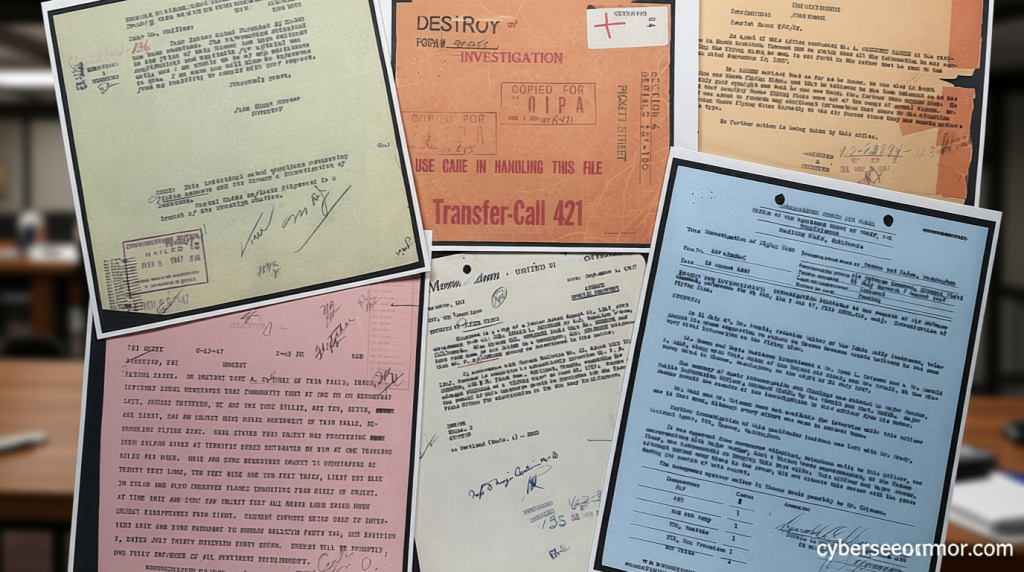
Declassified Pentagon Files Reveal Nazi UFO Claims
FBI files – The Pentagon has initiated the release of UFO-related documents, sparking renewed public fascination with the topic. These files, labeled as “Unidentified Anomalous Phenomena (UAP)” by the U.S. government, encompass 162 declassified records spanning from 1948 to 2026. The collection includes 120 PDFs, 28 videos, and 14 images sourced from multiple agencies, such as the Department of Defence, FBI, NASA, and the State Department. The materials range from old diplomatic cables to transcripts from NASA’s crewed space missions, offering a blend of historical and contemporary evidence. This release aims to satisfy public demand for transparency while providing a comprehensive view of the UAP phenomenon across decades.
Aerial Anomalies and Nazi Origins
Among the documents, one particularly intriguing segment references a suspected UFO-like aircraft developed by the Nazis during World War II. The files suggest that the regime invested significant resources into experimental weaponry, including so-called “wonder weapons” designed to shift the war’s momentum in their favor. Despite these efforts, the technology could not be mass-produced to alter the conflict’s outcome. However, the records hint at a more advanced project, one that may have predated modern UAP investigations by decades.
The FBI’s files describe a man named Paul Peyerl who claimed to have observed such a craft in the Black Forest in 1944. According to his account, the object was disc-shaped, approximately 6.5 meters wide, and operated remotely. It featured multiple jet engines on its outer rim, with the central dome remaining stationary while the outer section rotated. Peyerl, tasked with capturing the aircraft’s image, reportedly kept a photographic negative taken at an altitude of 7,000 meters. A Xerox copy of this image, along with a still photograph from a hangar, is included in the final pages of the document. The latter was taken “at the risk of his own life,” as Peyerl emphasized in his statements.
According to the files, the aircraft was designed by a German engineer named Kuehr, though his full name remains unknown. Peyerl speculated that Kuehr had been apprehended by the Allies following the war’s end. He also noted that Kuehr had attempted to evade military service but was eventually captured by the Gestapo. These details, while unverified, add a layer of mystery to the Nazi’s alleged pursuit of advanced aerospace technology.
Historical Context and Uncertainty
The FBI explicitly states that these documents contain no official conclusions or recommendations, leaving room for interpretation. This lack of definitive analysis means the existence of a Nazi UFO remains unproven. While some materials, like the description of the disc-shaped craft, are compelling, they lack the corroborating evidence needed to confirm their authenticity. The files also highlight the ongoing nature of UAP investigations, with many records still partially redacted to safeguard identities and locations.
One document, for instance, describes an FBI interview with a drone pilot who reported a “linear object” visible in the sky during September 2023. The witness described the object as emitting a light so intense that it allowed “bands within the light” to be discerned. “It was visible for five to ten seconds, then the light faded, and the object disappeared,” the pilot stated, as recorded in the FBI’s notes. Another file includes a NASA photograph from the Apollo 17 mission in 1972, featuring three dots arranged in a triangular pattern. The Pentagon’s caption for this image notes that “no consensus exists on the anomaly’s nature,” though a new analysis suggests it might represent a physical object.
The newly launched website, which hosts these declassified files, evokes a nostalgic, retro aesthetic. It features prominently displayed black-and-white military imagery of flying objects, accompanied by typewriter-style text that emphasizes the era’s intrigue. While the site showcases notable sightings—such as a bright object making sharp 90-degree turns over Kazakhstan and Buzz Aldrin’s observation of a mysterious light during the Apollo 11 mission—it does not present conclusive proof of extraterrestrial involvement. These accounts, though interesting, are presented as part of a broader catalog of unexplained phenomena.
Public Reaction and Congressional Interest
The release has generated widespread discussion, with some members of the U.S. Congress advocating for further transparency. Critics argue that the partial redaction of documents obscures key details, while supporters claim the initiative marks a significant step toward uncovering the truth. Experts have noted that without additional analysis, these videos and images may be misinterpreted, raising questions about their credibility. President Donald Trump, who has long been a vocal proponent of UFO research, highlighted the release in a recent Truth Social post, stating that the public now has the opportunity to evaluate the evidence independently.
Despite the pentagon’s efforts, the files remain ambiguous. For example, the triangular formation in the Apollo 17 photograph has been the subject of debate, with some theorists linking it to extraterrestrial craft, while others attribute it to natural phenomena or equipment malfunctions. Similarly, Peyerl’s account of the Nazi UFO, though detailed, lacks corroborating evidence from other sources. This leaves room for speculation but also underscores the need for more rigorous investigation. The FBI’s role in the files is primarily archival, providing context without asserting a definitive stance on the existence of the craft.
As the public examines these materials, the implications of the Nazi UFO theory are being reevaluated. The idea that Germany may have developed advanced aerospace technology during the war has been debated for years, but the newly declassified documents add a new dimension to the discussion. While the possibility of extraterrestrial influence is not ruled out, the files emphasize the importance of considering human innovation as a potential explanation. The release also highlights the evolving nature of UAP research, which continues to bridge historical accounts with modern scientific inquiry.
Experts remain cautious about the files’ significance, noting that many of the documents are unresolved or have been discussed extensively before. However, the pentagon’s decision to make them public has reignited interest in the topic, particularly among those who believe in the existence of hidden technologies or extraterrestrial contact. As the debate continues, the files serve as both a historical record and a modern enigma, challenging our understanding of what is possible in the realm of aerospace development. Whether the Nazi UFO was a product of human ingenuity or an alien craft, the evidence presented leaves room for the imagination—and the need for further scrutiny.

