‘Shadow’s not alone’: Bald eagle fans mourning Jackie find ray of hope

Daftar Isi
A New Chapter for Shadow: Bald Eagle Fans Embrace Katie as Potential Mate
Cybersecarmor.com – Following the passing of Jackie, the beloved bald eagle who captured hearts across the nation, mourners have discovered an unexpected comfort in the form of a younger raptor named Katie. This new arrival has been spending time with Shadow, Jackie’s longtime companion, offering hope that life continues even after profound loss.
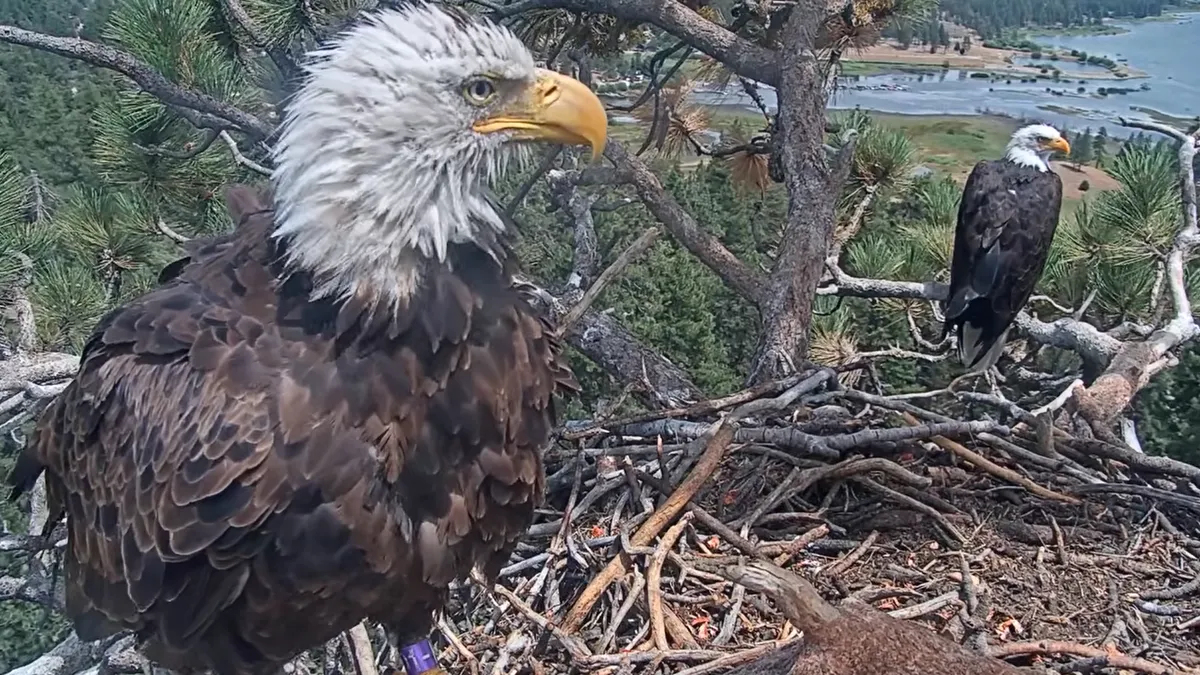
Viewers who have followed the livestream cameras at Big Bear Valley have watched Shadow and Katie interact over the past several days. On Thursday, August 13, the pair shared the nest for more than ten minutes—an occasion that marked Shadow’s first return to the nest since July 23 and his first documented encounter with Katie.
Observations showed the two eagles displaying curiosity toward one another. They appeared to touch beaks while examining each other, and Katie demonstrated nest-building behavior by picking up sticks and repositioning them. Some viewers humorously noted that she seemed to be rearranging the furniture.
“Thousands of us are watching like it’s the newest season of The Real Eagles of Big Bear Valley,” Debra Saplak of Akron, Ohio, wrote on Facebook. “After everything Shadow has been through, there’s something pretty special about watching this possible new chapter unfold − at their pace, on eagle time.”
The following day, Friday, August 14, live cameras captured Shadow and Katie perching together in the same tree for approximately two hours, further fueling speculation about a potential bond forming between them.
Who Is Katie?
While many fans have affectionately called her Katie, her official designation is KD1, a name assigned by wildlife biologists who placed identification bands on her. Born in March 2022 in the Prado Basin of Southern California’s Orange County, Katie grew up roughly 70 miles southwest of Big Bear Lake.
Jenna Carpenter, a wildlife biologist with the Orange County Water District, confirmed that Katie was among the eagles banded to help researchers understand bald eagle behavior, lifespan, and territorial patterns. The bands around her ankles drew playful commentary from social media users, with one TikTok user joking that “a lady with an ankle monitor may be fun . . . or trouble.”
Based on her size and physical characteristics, Carpenter and other wildlife officials believe Katie is female. At approximately 4.5 years old, she stands on the threshold of her first breeding season—a milestone that typically occurs around age five for bald eagles.
“It reminds us that nature is nature and life will go on,” said Jenny Voisard, spokeswoman for Friends of Big Bear Valley, the organization operating the eagle cameras and protecting these wild birds. “People are finding comfort in the fact that Shadow’s not alone.”
A Coincidental Connection
One detail that has delighted fans is a remarkable coincidence in Katie’s lineage. She hatched in 2022 to eagle parents named Lucy and Ricky. Jackie, who passed away after battling a mysterious illness, also hatched to parents with the same names—though she was born a decade earlier and 70 miles away.
Timing added another layer of meaning to Katie’s arrival. She was first spotted in Jackie and Shadow’s nest on Monday, August 10, mere hours after news broke that Jackie had succumbed to her illness. Cynthia Chamberlain, an eagle enthusiast, wrote on Facebook: “I think Jackie sent her to Shadow. She wouldn’t want him to be alone.”
Initially, some observers wondered whether Katie might actually be Jolene, a 3.5-year-old eagle believed to have confronted Jackie shortly before her hospitalization. Jolene had been seen perching with Shadow in July, prompting lighthearted jokes about Shadow potentially “cheating” on Jackie. However, Jolene remains somewhat of a mystery, as eagles of her age frequently explore new territories. Most experts agree she is likely too young to consider mating.
Voisard noted that Big Bear Valley serves as a hotspot for bald eagles during the non-nesting season, attracting numerous visiting birds throughout the summer months.
What Lies Ahead?
Whether Shadow and Katie will form a mating pair remains to be seen. Eagle mating hormones in California typically activate during December or January, which is when Jackie and Shadow would have begun reinforcing their nest over the past eight years.
While bald eagles are known for lifelong pair bonds, Shadow was not Jackie’s first mate. Her initial partner, known as Mr. B, produced two eaglets in 2018. One chick perished following a 24-hour rainstorm, but the survivor, named Stormy, departed Big Bear that same summer. Shortly thereafter, a new male arrived, displaced Mr. B, and won Jackie’s affection.
For now, fans continue to watch with anticipation, finding solace in the knowledge that Shadow has companionship and that the story of these remarkable birds continues to unfold.
Related Reading
Frequently Asked Questions
What is Shadow s not alone?
Shadow s not alone is the main topic of this guide. The article explains the context, practical details, and next steps readers should understand.
Why does Shadow s not alone matter?
Shadow s not alone matters because readers are looking for a useful answer, not just a short summary. Good content should match search intent and help them decide what to do next.