Amelia Earhart vanished in 1937. New evidence could find her plane.

Daftar Isi
New Quest to Locate Amelia Earhart’s Lost Aircraft Begins on Nikumaroro
Cybersecarmor.com – A nearly nine-decade mystery surrounding one of aviation’s most celebrated figures may finally yield its secrets. A fresh expedition is set to investigate the waters surrounding Nikumaroro Island, where researchers believe Amelia Earhart’s Lockheed Electra 10E might rest beneath the Pacific Ocean’s surface.
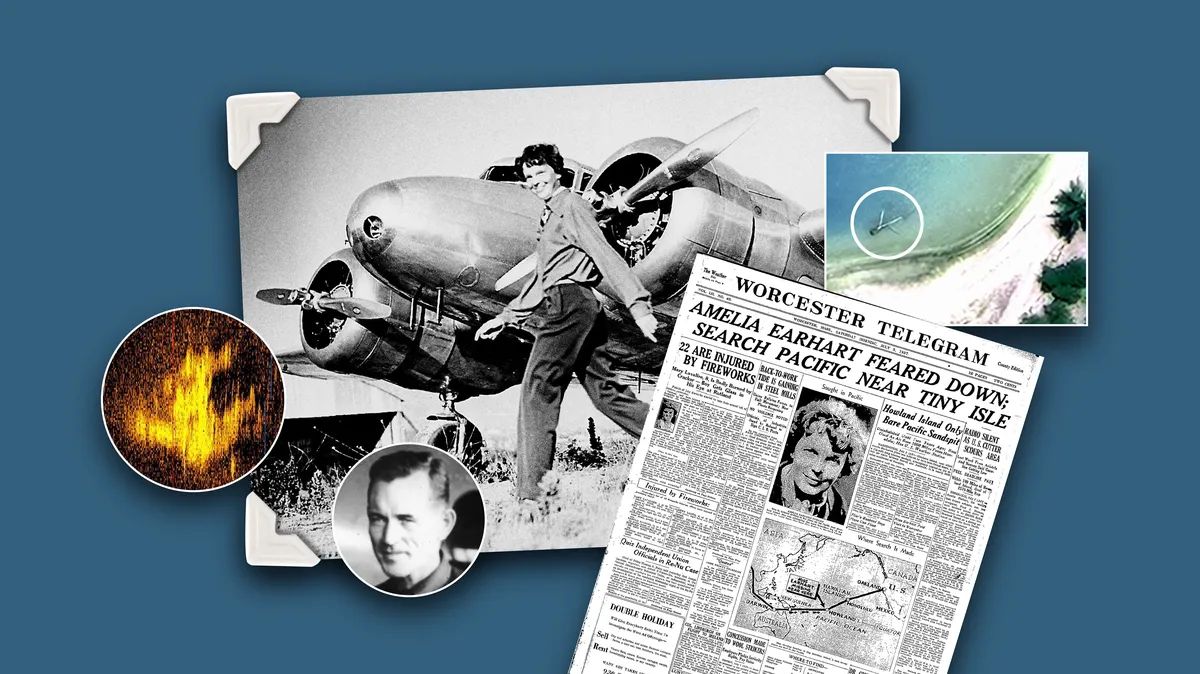
The search marks the twentieth organized effort to locate the aircraft since Earhart and navigator Fred Noonan disappeared on July 2, 1937. Their journey took them eastward from Lae in Papua New Guinea toward Howland Island, a diminutive landmass measuring less than New York’s Central Park, positioned between Australia and Hawaii.
The Taraia Object Expedition
Conducted jointly by the Archaeological Legacy Institute and Purdue University, this latest mission focuses on uncovering what experts call the Taraia Object. Satellite imagery first revealed this plane-shaped anomaly in 2020, though historical photographs suggest it has occupied the same position within Nikumaroro’s lagoon since 1938.
Nikumaroro represents a coral atoll situated approximately 350 miles southeast of Howland Island in the vast Pacific Ocean. The sixteen-member expedition team will depart in early October, dedicating multiple days to working within the lagoon. Researchers plan to employ a hydraulic dredge to carefully extract sediment from the suspected location of the Electra.
Primary objectives include identifying the aircraft’s largest structural components—the fuselage and wings. Finding rivets embedded in aluminum aircraft skin would provide crucial evidence, as comparing their spacing and geometric patterns could confirm the wreckage’s identity.
Two Competing Theories
When Earhart vanished, the Coast Guard cutter USCGC Itasca awaited her near Howland Island, prepared to refuel the Electra following its landing. The vessel received voice transmissions from Earhart showing increasing signal strength. She communicated that fuel reserves were nearly exhausted.
Government records analyzed by the Smithsonian Institute indicate that neither Earhart nor Noonan possessed knowledge of Morse code, preventing two-way communication during their final moments. The conventional understanding holds that the aircraft depleted its fuel supply and plunged into the Pacific while searching for Howland. The U.S. Navy reached this determination after conducting a sixteen-day search operation in 1937.
Alternative evidence has generated a competing hypothesis. Sophisticated satellite imagery, documented radio transmissions, and various archaeological discoveries have prompted researchers to propose that Earhart and Noonan successfully landed on Nikumaroro’s reef. This theory suggests the pair survived briefly as castaways before the bus-sized aircraft was eventually swept into the ocean.
The Nikumaroro theory traces its origins to TIGHAR, The International Group for Historic Aircraft Recovery, which has examined this possibility since 1988. Between 1989 and 2017, TIGHAR conducted twelve separate expeditions to the island. The organization maintains that whatever portions of the Electra remain lie in deep water off the island’s western extremity.
Historical Connections and Legacy
Purdue University’s relationship with Earhart extends back to 1935. During that period, she served as a career counselor for women and provided advisory support to the university’s Department of Aeronautics. The Amelia Earhart Terminal remains a feature of the Purdue University Airport.
Steve Schultz, Purdue’s senior vice president, indicated that the institution is negotiating an agreement with Kiribati, the sovereign nation governing Nikumaroro, to secure custody of any recovered wreckage.
Earhart maintained a notable friendship with First Lady Eleanor Roosevelt. On April 20, 1933, during a formal dinner where President Franklin Roosevelt was absent, the two women departed the White House, traveled to Hoover Field, and undertook an unscheduled flight to Baltimore.
The aviator’s cultural significance endures across generations. The United States Postal Service released an eight-cent airmail stamp bearing her portrait on July 24, 1963, coinciding with what would have been her sixty-sixth birthday. Mattel introduced the Amelia Earhart Barbie in 2018 as part of its Inspiring Women Series. LEGO subsequently launched its Amelia Earhart Tribute set in March 2021, honoring International Women’s Day with a model of her red Lockheed Vega 5B aircraft.
What Comes Next
If the ALI and Purdue team successfully identifies the Electra, they will not enter the aircraft immediately. Instead, they plan to return the following year for comprehensive excavation work. Subsequent phases would involve removing the aircraft and associated remnants, ultimately transporting them back to the United States for preservation and study.
The Taraia Object Expedition represents more than a technical search operation. It embodies humanity’s enduring fascination with Earhart’s life, achievements, and the circumstances of her disappearance. Whether the Electra awaits discovery in Nikumaroro’s lagoon or rests elsewhere in the Pacific, this expedition brings researchers one step closer to resolving one of aviation’s most compelling mysteries.
Related Reading
Frequently Asked Questions
What is Amelia Earhart vanished in 1937 New evidence?
Amelia Earhart vanished in 1937 New evidence is the main topic of this guide. The article explains the context, practical details, and next steps readers should understand.
Why does Amelia Earhart vanished in 1937 New evidence matter?
Amelia Earhart vanished in 1937 New evidence matters because readers are looking for a useful answer, not just a short summary. Good content should match search intent and help them decide what to do next.