
In Damascus, cooking kosher continues to be a complicated matter for Syria’s Jewish community
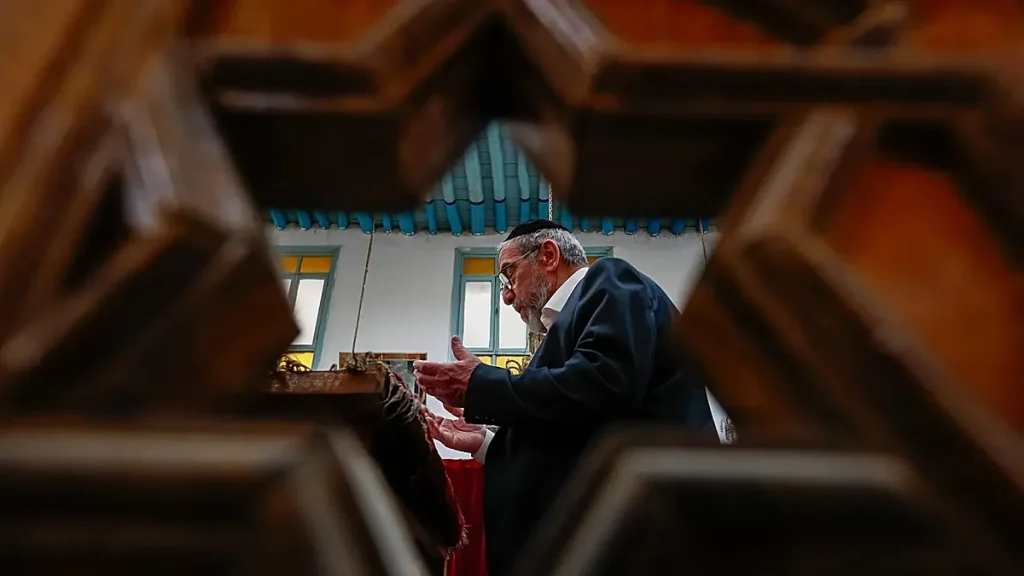
The Jewish Quarter’s Lasting Legacy
In Damascus cooking kosher continues to be – Once a vibrant hub of Jewish life in Damascus, the ancient Jewish Quarter now echoes with the remnants of a fading tradition. Today, fewer than a hundred Jewish individuals remain in Syria, a far cry from the tens of thousands who once called the region home. Despite the population decline, the quarter still stands as a symbol of resilience, where the struggle to preserve kosher practices has taken on new urgency. Maintaining religious customs in such a small community requires meticulous effort, and nowhere is this more evident than in the daily search for kosher food.
A Shrinking Community
Syria’s Jewish community, concentrated in Damascus, faces an existential challenge. With numbers dwindling to a mere fraction of their former size, sustaining traditions like kosher cooking has become a precarious endeavor. The narrow, stone-paved alleys that once bustled with Jewish merchants and families now see fewer visitors, yet the community’s cultural footprint persists. Shamntoub, the leader of Syria’s Jewish Mussawi community, highlighted this struggle during an interview with Euronews, explaining how a practice once central to communal life now depends on individual dedication and occasional support from abroad.
The Butcher’s Dilemma
Kosher law, as outlined by Shamntoub, mandates strict conditions for meat preparation. Lamb, beef, and chicken are permissible, but only when handled by a Jewish butcher with official certification. This requirement has become a critical barrier in Damascus, where the availability of such a butcher is limited. “In the past, a Jewish man worked alongside a Muslim butcher in the Al-Qassaa district,” Shamntoub recalled. “But the Jewish butcher left the country, and the Muslim one stayed. Regardless of how skilled the latter is, his work doesn’t meet kosher standards because the butcher must be Jewish.”
“The knife used must be made of pure diamond, not a regular blade, to ensure a swift cut that minimizes the animal’s pain. After slaughter, the butcher inspects the meat for signs of disease using a specific method—blowing into the animal to detect illness. If it’s sick, its meat is not consumed. Even an injured animal before slaughter is disqualified.”
These rules, while seemingly simple, create logistical hurdles. The shortage of qualified butchers has forced the community to rely on imports from Turkey and packages sent by relatives in the United States. Before the political upheaval that followed the fall of Bashar al-Assad’s regime, the supply chain was stable. However, since December 2024, this connection has weakened, leaving the community to navigate an increasingly fragmented food system.
Reviving Tradition Amid Challenges
Shamntoub expressed hope for a revival of local kosher meat production in Damascus. “We plan to bring a Jewish butcher back to the city,” he said. “With him, we can prepare meat according to Jewish tradition and store it in refrigerators.” This initiative aims to restore the community’s ability to self-sustain its dietary needs. Yet, the dream of opening full kosher restaurants remains elusive. “There aren’t enough Jews to support such ventures,” Shamntoub noted. “At most, 15 to 20 people might visit Damascus for a month, but even that is a stretch.”
The Semiramis Hotel in the Old City has taken a step toward bridging this gap by introducing a Jewish cuisine section. Meat is sourced from outside Syria, but the cooking is done on-site. Shamntoub emphasized that this setup adheres strictly to kosher standards. “Every utensil, from plates to pots, must be entirely new and specially prepared,” he stated. Used cookware cannot be employed in the preparation of kosher meals, adding another layer of complexity to the effort.
Mixed Reactions to Kosher Dining
The push for kosher dining has sparked divided opinions among Damascus’s restaurant owners. Some reject the concept on principle, arguing that restaurants should cater to all communities. Others focus on the economic feasibility, questioning whether the small Jewish population and low tourist numbers justify the cost of specialized slaughterhouses, trained chefs, and sterilization equipment. “It’s hard to justify the investment for such a niche market,” one owner told Euronews.
Security concerns also play a role in the hesitation. The Semiramis Hotel’s announcement of its kosher section drew immediate criticism online, with some threatening extremists targeting the new venture. “The security situation makes it risky to open such a door,” said one owner. Despite these challenges, some see potential in attracting the Jewish diaspora. “Kosher dining could draw interest from those who visit Damascus, especially if the experience is authentic and culturally significant,” another owner suggested.
Adapting to Survival
For those without access to kosher meat, the options are limited. Fish, which requires fewer restrictions, has become a practical alternative. Shamntoub himself chooses vegetarian dishes like hummus or ful (a fava bean stew) when dining in ordinary Damascus restaurants. “These foods are safe for all, and they allow me to eat without compromising tradition,” he explained.
The future of Damascus’s Jewish community hinges on several factors, including tourism growth and the restoration of the supply chain. Shamntoub’s vision involves creating proper slaughterhouses and certified butchers, which would require consistent demand. “If more people from the Jewish diaspora come to visit, we could establish a sustainable system,” he said. However, until then, the community continues to navigate the delicate balance between preservation and adaptation, ensuring that its traditions survive despite the odds.
Preserving Identity in a Changing Landscape
While the challenges are significant, the Jewish community in Damascus remains determined to uphold its heritage. From the meticulous preparation of kosher meals to the symbolic efforts of local restaurants, every action reflects a commitment to identity. Shamntoub’s plans for reviving meat production and the Semiramis Hotel’s specialized section illustrate the community’s resilience. Yet, the path forward is uncertain, requiring both local effort and external support to thrive in a world that has moved on from its former traditions.
As the city evolves, the Jewish Quarter stands as a testament to a culture that persists against all odds. The struggle to maintain kosher practices is more than a culinary challenge—it is a battle to keep history alive in a rapidly changing society. Until the community finds a way to sustain itself, the delicate art of Jewish cuisine in Damascus will continue to rely on the quiet perseverance of its few remaining members.

