2 dead after Army Apache helicopter from Fort Hood crashes in Texas

Daftar Isi
Tragedy Strikes Fort Hood as Apache Helicopter Plummets in Central Texas
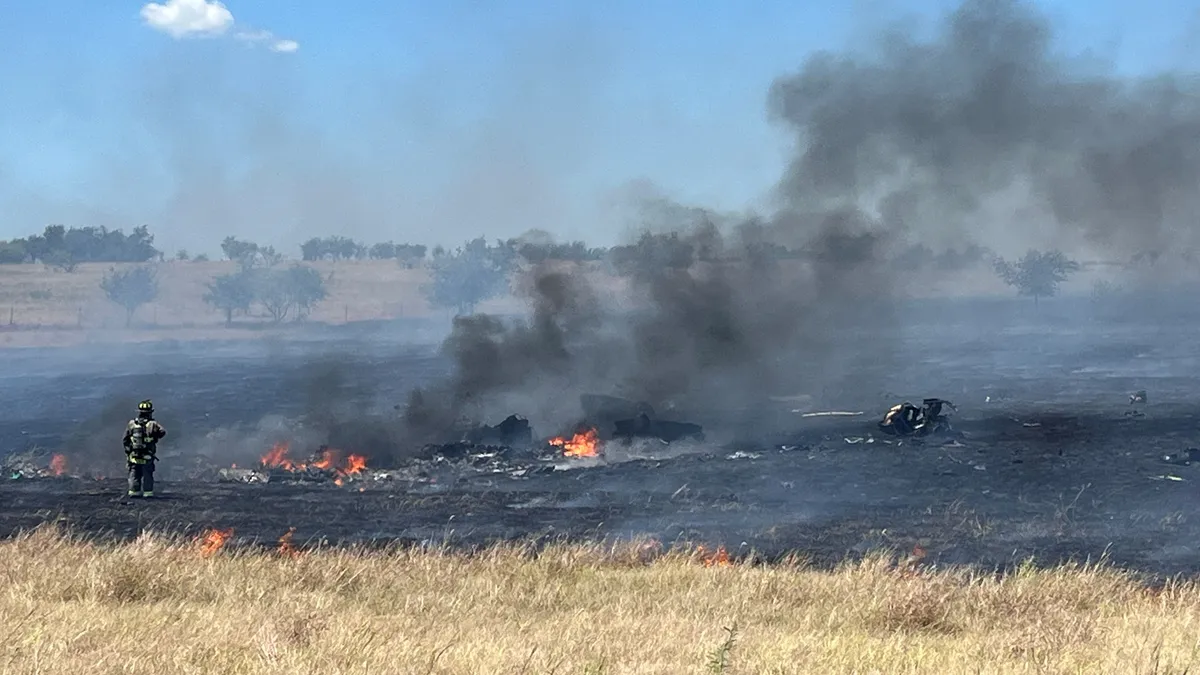
Cybersecarmor.com – A devastating incident unfolded on Tuesday afternoon when a U.S. Army Apache helicopter descended into a field in central Texas, claiming the lives of two service members and igniting a substantial grass fire that forced local evacuations. The crash occurred in the vicinity of Salado, a small community situated approximately 30 miles southeast of the sprawling Fort Hood military installation, one of the largest Army bases in the United States.
Emergency dispatchers began receiving frantic 911 calls around 1:34 p.m. local time, with residents reporting the dramatic descent of a military aircraft. Responding deputies from the Bell County Sheriff’s Office arrived at the scene to discover the mangled wreckage of the helicopter alongside a raging grass fire that had quickly grown beyond containment. The violent impact was evident to first responders who witnessed the aftermath firsthand.
Confirmation of Casualties and Immediate Response
By 2:30 p.m., officials confirmed that both soldiers aboard the aircraft had been pronounced dead at the scene. The identities of the fallen service members remain withheld pending notification of their families, a standard protocol in military fatalities. Brigadier General Ethan Diven, serving as the acting commanding general of the 1st Cavalry Division, issued a heartfelt statement expressing condolences to the bereaved families, friends, and fellow Troopers affected by this sudden loss.
“Our thoughts and deepest sympathies are with the families, friends, and fellow Troopers of those involved during this incredibly difficult time,” Diven said in his official statement.
The Apache helicopter, identified as an AH-64 model stationed at Fort Hood, crashed directly into open terrain without striking any residential homes or commercial structures. This fortunate circumstance prevented additional casualties beyond the two crew members. Cliff Coleman, a spokesperson for the sheriff’s office, described the impact during a press conference, noting that witnesses could immediately recognize the severity of the collision.
“It crashed into a field, and you could tell it was a violent crash,” Coleman explained to gathered reporters.
Regional Impact and Emergency Measures
The crash triggered immediate emergency protocols across the region. Local fire departments, military personnel, and various law enforcement agencies converged on the scene to manage the situation. The Salado Fire Department issued a public safety alert urging residents to avoid the affected area, noting that the primary roadway near the crash site had become impassable due to the fire and emergency vehicles.
Authorities implemented precautionary road closures to facilitate emergency response operations and ensure public safety. Some residents in the surrounding neighborhood were evacuated as a preventive measure while firefighters worked to contain the grass blaze. The fire department utilized social media platforms to communicate with the public, requesting that motorists select alternate routes to maintain clear access for emergency personnel.
“Please avoid the roadway and choose an alternate route,” the fire department advised on social media. “This will help keep traffic clear for responding fire and emergency personnel.”
Investigation and Military Context
The Army’s Criminal Investigation Division at Fort Hood has assumed leadership of the comprehensive investigation into the circumstances surrounding the crash. Military investigators will examine multiple factors including mechanical systems, weather conditions, pilot operations, and any other potential contributing elements to determine the cause of the accident.
Texas Governor Greg Abbott acknowledged the tragedy in a public statement, confirming that two service members perished during routine operations at Fort Hood. The governor expressed gratitude to military personnel who serve the state and nation, calling on citizens to join him in prayer for the affected families. Abbott announced that the bodies of the deceased soldiers would be transported to the Carl R. Darnall Army Medical Center at Fort Hood for further processing.
“Join Cecilia and me in prayer for their families and the entire Fort Hood community,” Abbott wrote in his statement on X. “Texas is forever indebted to those who serve our state and nation.”
The AH-64 Apache represents one of the most capable attack helicopters in modern military aviation. This two-seat aircraft features a distinctive configuration with the pilot positioned in the rear cockpit while the co-pilot gunner occupies the front seat. The Apache has served as a cornerstone of Army aviation operations for decades, providing critical air support capabilities in conflicts worldwide.
Fort Hood, now officially designated as Fort Cavazos, remains a vital hub for Army operations and training. The base houses thousands of service members and supports numerous military units, making incidents like this particularly significant for the local community and the broader military establishment. The investigation will continue as authorities work to provide answers to the families and the public regarding the circumstances that led to this tragic loss of life.
Related Reading
Frequently Asked Questions
What is 2 dead after Army Apache helicopter?
2 dead after Army Apache helicopter is the main topic of this guide. The article explains the context, practical details, and next steps readers should understand.
Why does 2 dead after Army Apache helicopter matter?
2 dead after Army Apache helicopter matters because readers are looking for a useful answer, not just a short summary. Good content should match search intent and help them decide what to do next.