
Rubio talks to Meloni and Tajani about US, Italian and EU relations: from the Iran war to Trump’s tariffs
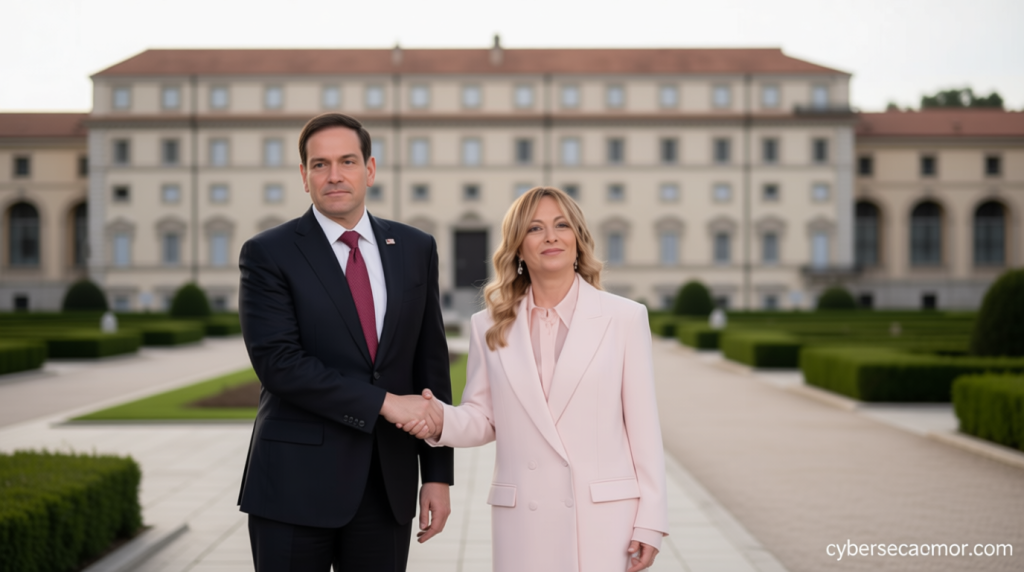
US and Italian Diplomacy Focuses on Strategic Ties and Regional Security
Rubio talks to Meloni and Tajani – During a pivotal visit to Rome, US Secretary of State Marco Rubio engaged in high-level discussions with Italian officials, marking a significant diplomatic exchange. The talks, held after Rubio’s audience with the Pope at the Vatican on Thursday, were centered on reinforcing transatlantic partnerships and addressing pressing global challenges. Italian Foreign Minister Antonio Tajani, who hosted Rubio at his office, emphasized the importance of American influence in Europe, stating that Italy “does not want trade wars” and remains committed to maintaining stability in international trade. The meeting, which lasted over an hour and a half, underscored the shared priorities between the United States and Italy, particularly in the context of evolving conflicts and economic policies.
Iran Conflict and US Strategic Positioning
Rubio’s conversations with Tajani and Italian Prime Minister Giorgia Meloni highlighted the ongoing Iran war and its implications for regional security. The US official noted that the situation in Iran was a critical concern, with the potential for further escalation in the Middle East. “We await a development in the coming hours” on peace negotiations with Iran, Rubio remarked, signaling a sense of urgency in the diplomatic efforts. He also reiterated the stance of US President Donald Trump regarding troop presence in Italy, stating that “the withdrawal of troops has not yet been decided,” while affirming his personal backing for NATO and the need for a robust European military posture.
“With Meloni we have not talked about bases,” Rubio said at a press briefing at the US embassy in Rome, “but some countries like Spain by denying use have created unnecessary dangers for us.” This comment underscored the importance of collaboration and the challenges of securing access to strategic locations. Additionally, Rubio mentioned that talks on Lebanon’s crisis would likely occur “probably next week,” acknowledging Italy’s unique role in the region due to its “expertise and presence on the ground.”
The discussion also revisited the previous visit of Rubio to the Vatican, where he met with Pope Leo XIV. He described the encounter as “very positive,” emphasizing its significance in aligning US and Italian perspectives on global issues. “It was an important meeting to exchange our views and explanations on what we are doing,” Rubio explained, adding that he shared updates on the Iran situation and outlined the rationale for the ongoing military operation. “I expressed our views on why this operation was important and the danger Iran poses to the world,” he said, highlighting the strategic necessity of the US presence in the region.
Italy’s Role in Multilateral Security Initiatives
Following the meeting, Tajani shared his reflections on the diplomatic engagement, stressing Italy’s commitment to multilateral efforts. “I reaffirmed Italy’s full support for diplomacy as the only way to avoid further escalation in the Middle East and ensure freedom of international navigation,” Tajani wrote on X. His remarks pointed to the country’s readiness to contribute to a naval initiative in the Strait of Hormuz, which he described as “defensive in nature” and essential for maintaining maritime security. Tajani also reiterated the importance of an American presence in Europe, stating that “it is important to have an American presence in Europe to strengthen NATO” and that “a strong commitment from Europeans in this regard” is equally vital.
During the same meeting, Rubio presented a family tree that highlighted his Italian and Cuban heritage. The document was shared in the presence of the president of the Piedmont Region and the mayor of Casal Monferrato, adding a personal dimension to the formal discussions. This gesture underscored Rubio’s connection to Italy’s cultural and historical roots, while also reinforcing the US-Italy partnership in both political and economic spheres.
Economic and Geopolitical Priorities
The agenda for the talks at the Italian Ministry of Foreign Affairs (Farnesina) included a range of topics, from strengthening the EU-US relationship to addressing economic concerns. Tajani expressed support for a “big market” that encompasses Europe, the US, Canada, and Mexico, advocating for the reduction of trade barriers. This stance came in response to Trump’s recent announcement of new tariffs on the auto sector, a move that has sparked debates about its impact on transatlantic trade.
According to a statement released by the US State Department, the meetings focused on “bilateral cooperation as well as global and regional security challenges.” The note also highlighted the importance of Western nations protecting their economic interests, a theme that resonated with both Rubio and Tajani. The discussions on Ukraine, Venezuela, and Cuba reflected the broader strategic considerations of the United States, with Italy positioning itself as a key player in these contexts.
As the talks concluded, the Italian government reaffirmed its dedication to fostering a cooperative relationship with the US. Tajani’s emphasis on the “American presence in Europe” and the mutual benefits of such collaboration demonstrated Italy’s role as a bridge between the transatlantic alliance and the European Union. The exchange between Rubio and Meloni, combined with the insights from Tajani, signaled a unified approach to navigating the complexities of global diplomacy and economic policy.
Rubio’s visit to Rome not only addressed immediate concerns but also laid the groundwork for future cooperation. The focus on regional stability, economic integration, and military readiness highlighted the interconnected nature of global challenges. By engaging with Italian leaders, the US sought to solidify its strategic alliances and ensure a coordinated response to emerging threats. The discussions reflected a shared vision of a stable and prosperous Europe, with Italy playing a central role in shaping this future.

