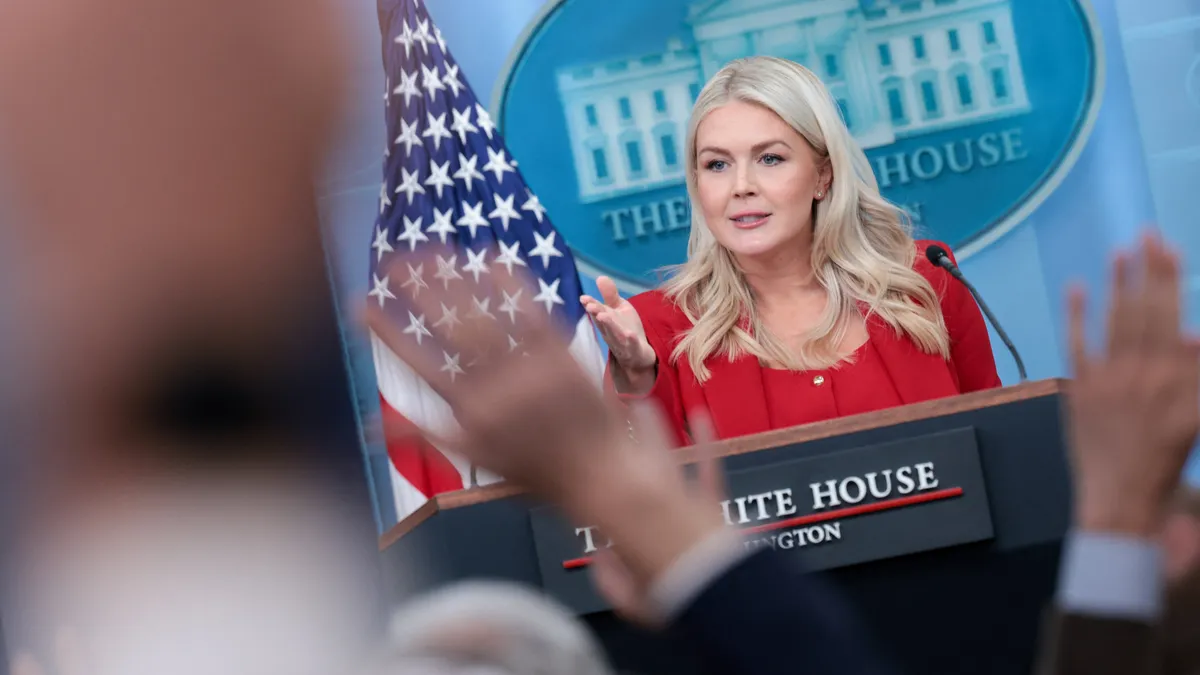
Trump press secretary Karoline Leavitt to leave White House

Daftar Isi
Leavitt Steps Down as White House Press Secretary to Focus on Family
Cybersecarmor.com – President Donald Trump announced that Karoline Leavitt will conclude her tenure as White House press secretary at the close of August, marking a significant transition for one of the administration’s most prominent positions. The 28-year-old, who holds the distinction of being the youngest individual to serve as press secretary in American history, cited her desire to dedicate more time to her growing family as the primary motivation for her departure.
Trump shared the news through a Truth Social message on August 12, praising Leavitt as “one of my most trusted aides” and describing her as “wonderful.” The president emphasized that he fully comprehends and honors her choice, while noting that Leavitt will continue serving as one of his principal outside advisers and maintaining her influence within Republican circles.
“Karoline has been one of the best White House Press Secretaries in the History of the Office. Thank you, Karoline, for a job well done!” Trump wrote in his announcement.
A Historic Tenure Comes to a Close
Leavitt’s service spans Trump’s complete second term in office, during which she established herself as a dynamic and forceful communicator. Her energetic approach behind the podium has frequently shaped how the White House addresses diverse policy matters and political developments. Her communications style has been characterized by directness and vigor, setting a tone that has become recognizable to the public.
The timing of her departure follows a personal milestone. Leavitt recently resumed her duties after taking maternity leave for the birth of her daughter, Viviana, in May. This marks the second child for Leavitt and her husband, Nicholas Riccio. Their son, Nicholas, affectionately known as “Niko,” celebrated his second birthday in July.
“Serving as the White House Press Secretary over the past year and a half has been the honor and adventure of a lifetime,” Leavitt expressed in a public statement. She acknowledged Trump for providing her with the opportunity and “entrusting me with the distinct privilege of speaking on his behalf at the White House podium.”
Personal Priorities Take Center Stage
Leavitt highlighted the complexity of balancing motherhood with the demanding responsibilities of her position. She described this period as “the most rewarding yet challenging season of my life, to say the least.”
“The truth is since returning to the White House after the birth of my daughter, I have felt in my heart that I cannot be the best mom my two young children deserve while devoting the constant time, energy, and attention required of the White House Press Secretary,” Leavitt explained. “And that is why I have ultimately made the bittersweet decision to depart the White House and embark on a new chapter in my life.”
Looking Ahead: What Comes Next
Trump has not yet identified a successor for Leavitt’s position. The outgoing press secretary brings valuable experience to the role, having previously worked as a press aide during Trump’s first term. She also attempted an unsuccessful congressional campaign as a Republican candidate in her home state of New Hampshire in 2022.
Her departure represents a relatively stable moment in White House personnel changes. Trump has maintained considerable continuity among his senior aides throughout his second term, a notable contrast to the more frequent turnover experienced during his initial four years in office. Between 2017 and 2021, Trump cycled through four different press secretaries: Sean Spicer, Sarah Huckabee Sanders, Stephanie Grisham, and Kayleigh McEnany.
When Leavitt officially concludes her service at the end of August, she will rank as the second longest-serving press secretary under Trump’s presidency, with only Sanders holding a longer tenure. Her legacy will likely be remembered for her energetic communication style and her historic achievement as the youngest person to hold the position.
The transition will provide an opportunity for the White House to potentially reshape its communications strategy as it moves forward. Leavitt’s continued role as an outside adviser suggests she will remain connected to the administration even as she begins this new phase of her life focused on family priorities.
Related Reading
Frequently Asked Questions
What is Trump press secretary Karoline Leavitt to leave?
Trump press secretary Karoline Leavitt to leave is the main topic of this guide. The article explains the context, practical details, and next steps readers should understand.
Why does Trump press secretary Karoline Leavitt to leave matter?
Trump press secretary Karoline Leavitt to leave matters because readers are looking for a useful answer, not just a short summary. Good content should match search intent and help them decide what to do next.