
Video. Aerial footage shows widespread tornado damage across Mississippi
Video. Aerial footage shows widespread tornado damage across Mississippi
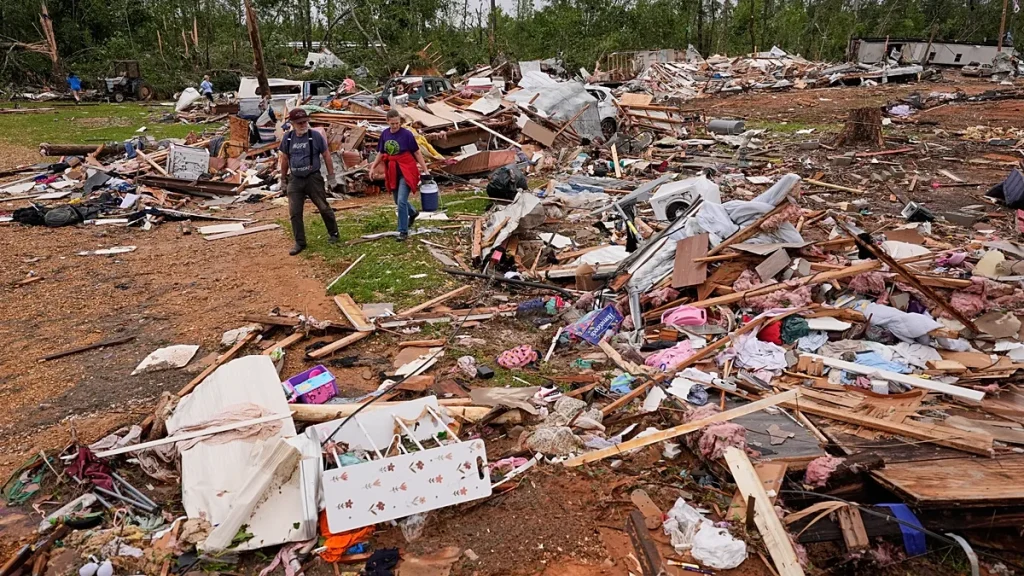
Aerial footage shows widespread tornado damage – Severe weather systems unleashed chaos across Mississippi on Wednesday, May 8, as powerful storms and at least three tornadoes swept through multiple counties. The damage inflicted by these natural disasters has been captured in stunning aerial footage, offering a grim view of the destruction. Approximately 500 homes were left in disarray, while at least 17 individuals sustained injuries. The footage reveals a landscape transformed by the force of the tempest, with entire neighborhoods reduced to ruins.
The imagery from above illustrates the sheer magnitude of the destruction. Buildings that once stood tall now lie in splinters, their remnants scattered across the ground. Vehicles, including cars and trucks, were uprooted or tossed like toys, while trees—some towering over two stories—were torn from their bases, creating a surreal tableau of devastation. The footage highlights the impact on both urban and rural areas, with large swathes of land showing signs of extreme damage.
Impact on Communities and Infrastructure
Residents, still in shock, ventured through the wreckage to assess the damage to their properties. Many described the aftermath as a “nightmare” that unfolded overnight, with families forced to shelter in place or evacuate their homes. The destruction extends beyond homes; roads were cracked, power lines snapped, and agricultural fields were flattened. Emergency teams worked tirelessly to clear debris and provide aid, while local authorities coordinated efforts to restore order.
According to the Mississippi Emergency Management Agency, the storms struck in the late afternoon, catching many communities unprepared. “The intensity of the weather was unprecedented,” said a spokesperson for the agency,
“We’ve seen multiple tornadoes touch down in quick succession, leaving a path of destruction that is still being mapped out.”
The agency also noted that while no fatalities have been reported, the situation remains critical, with ongoing assessments needed to determine the full extent of the damage.
Recovery Efforts and Public Response
As the dust settled, the focus shifted to recovery. Local officials emphasized the need for immediate action to address the crisis. “We are working around the clock to assist affected residents and ensure their safety,” added the spokesperson.
“Our priority is to get people back on their feet, but the scale of the damage is overwhelming.”
Volunteers and residents alike joined forces to search for survivors and begin cleanup operations, though the road to recovery will be long.
The footage has sparked a wave of concern and solidarity across the state. Social media platforms have been flooded with images and videos from the affected areas, drawing attention to the plight of the people. “It’s like a war zone,” shared a resident from a small town in the region.
“Everything is gone—my car, my roof, my garden. We’re just trying to survive until the morning.”
Such accounts highlight the personal toll of the disaster, underscoring the resilience of the community despite the overwhelming odds.
Experts have begun analyzing the storm patterns that led to the tornadoes. The National Weather Service reported that the system was fueled by a combination of warm, moist air and cold fronts, creating the perfect conditions for severe weather. “Mississippi is no stranger to tornadoes, but the frequency and strength of these events have increased in recent years,” said a meteorologist.
“Climate change may be contributing to more extreme weather conditions, making events like this more common.”
This analysis adds context to the current disaster, linking it to broader environmental trends.
Meanwhile, neighboring states have offered support, with Alabama and Louisiana sending teams to assist with rescue operations. “We’re standing shoulder to shoulder with Mississippi as they recover from this disaster,” stated a representative from the Louisiana Department of Homeland Security.
“Our resources and expertise will be crucial in helping them rebuild and regain stability.”
The collaborative effort reflects the interconnectedness of the region and the shared commitment to disaster response.
Local businesses and organizations have also mobilized to aid affected communities. Charitable groups are collecting donations to support displaced families, while local restaurants are offering free meals to emergency workers. “We need to come together and show that we can overcome this,” said a community leader.
“Every little bit helps, and we’re all in this together.”
These grassroots initiatives complement the larger-scale efforts by government agencies and highlight the strength of the community spirit.
As the situation continues to unfold, the focus remains on assessing the damage and planning for the future. The storms that hit Mississippi on May 8 serve as a stark reminder of the power of nature and the importance of preparedness. “This is a wake-up call for everyone,” remarked a state official.
“We must invest in better infrastructure and emergency response systems to protect our communities.”
The devastation caused by the tornadoes is a sobering experience, pushing residents and officials to take action for a more resilient Mississippi.

