
EU steps up coordination on hantavirus but insists risks for citizens are ‘low’
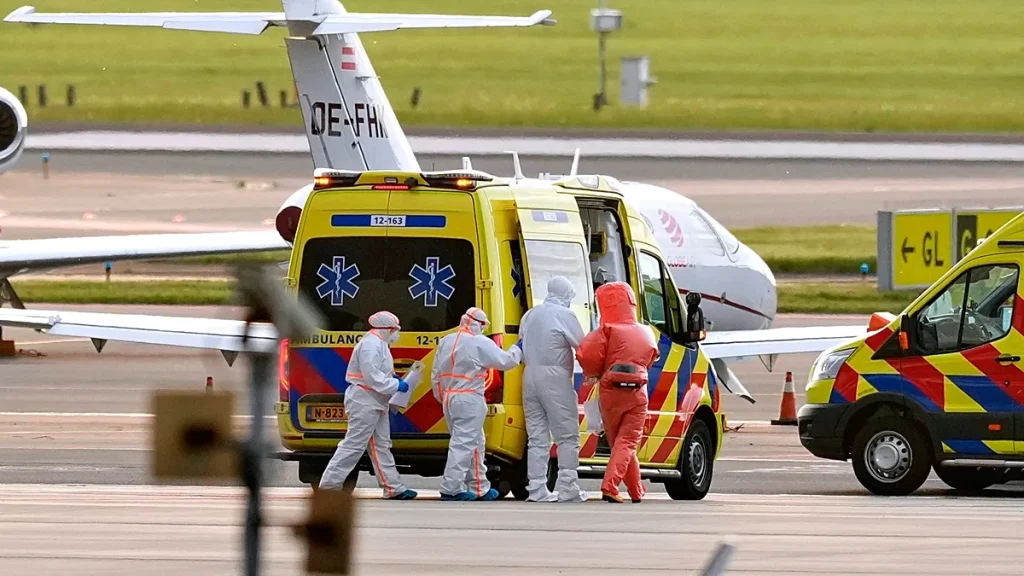
EU Intensifies Collaboration on Hantavirus Outbreak Amid Claims of Low Risk
EU steps up coordination on hantavirus – The European Commission has intensified collaboration with EU member states to address the hantavirus outbreak affecting the MV Hondius cruise ship, while reaffirming that the risk to the general population remains minimal. This coordinated response follows the ship’s journey from Argentina to Spain, where a growing number of cases have prompted heightened vigilance across the bloc. The Commission emphasized that its efforts are aimed at ensuring public safety and mitigating potential spread, even as it downplayed the immediate danger to European citizens.
Health Security Committee Meets to Address Crisis
A key step in the EU’s unified approach was a meeting of the Health Security Committee, a body comprising healthcare professionals and officials from all member states. The gathering took place on Wednesday, where discussions focused on the evolving situation aboard the MV Hondius and strategies to contain the outbreak. Representatives from various countries shared insights on the virus’s behavior and the effectiveness of current containment measures, highlighting the importance of rapid information exchange during health emergencies.
Following the committee’s session, the Commission convened two separate meetings on Thursday. The first involved Dutch and Spanish authorities, who are directly affected by the crisis. The second brought together all EU nations with nationals on board the vessel. These meetings underscored the EU’s commitment to a centralized response, ensuring that each country’s unique situation is addressed while maintaining a unified strategy. Eva Hrncirova, the Commission’s spokesperson for health, reiterated that the outbreak does not pose a significant threat to public health, citing the current evidence to support her assertion.
“As the evidence stands, according to the current situation, there is no cause for concern at the moment,” Hrncirova stated during a press briefing on Thursday afternoon. “The risk for the public in Europe, the risk for the Europeans, is low. The health of the citizens in Europe is our absolute priority, and this obviously applies in this case.”
The coordination efforts also include the European Centre for Disease Prevention and Control (ECDC), which has deployed an expert to the MV Hondius. This expert is working alongside the World Health Organisation (WHO) to assess the outbreak’s scope and recommend preventive actions. The Commission’s spokesperson noted that these organizations are playing a critical role in providing scientific guidance and ensuring that member states are aligned in their response.
Spain Activates EU Civil Protection Mechanism
Spain, which is the primary destination for the MV Hondius, has activated the EU’s Civil Protection Mechanism. This initiative allows for the swift mobilization of resources and expertise from across the bloc to support national efforts during emergencies. Hrncirova explained that the Commission is currently evaluating the specific needs of Spain and exploring the types of assistance that could be offered. “We are assessing the modalities and the needs of Spain, and we are discussing what kind of assistance could be provided,” she added.
The ship, which originally carried 149 people—88 passengers and 61 crew members—when it departed Argentina on 1 April, has been a focal point of the response. Spain’s activation of the mechanism highlights the country’s proactive stance in managing the situation, even as local authorities express concerns about the ship’s arrival. Around 40 passengers disembarked in Santa Helena, a port the vessel visited prior to its journey to Cape Verde, and contact tracing is underway to identify individuals who may have been exposed.
Hantavirus: A Rodent-Borne Threat
The hantavirus, which is primarily spread by rodents, has been the subject of increased scrutiny due to its recent appearance on the MV Hondius. The virus is transmitted to humans through inhalation of airborne particles from dried rodent droppings, a process that can occur in enclosed spaces like cruise ships. While the WHO has reported eight confirmed cases, including three fatalities, the Commission has maintained that the outbreak is not indicative of a broader public health crisis.
Hrncirova clarified that human-to-human transmission of hantavirus is considered “unusual,” distinguishing it from more contagious pathogens like the coronavirus or influenza. This distinction is crucial in shaping the EU’s risk assessment, as it suggests the outbreak is more localized and less likely to escalate into a widespread epidemic. The Commission’s emphasis on low risk aligns with the WHO’s current stance, which highlights the virus’s primary mode of spread and its limited capacity for person-to-person transmission.
Continuing Efforts and Regional Implications
As the MV Hondius continues its voyage toward the Canary Islands, the EU remains focused on monitoring the situation and supporting affected nations. The ship’s route has drawn attention from local authorities, who have voiced opposition to its reception in Spanish ports. Despite this, the Commission has insisted that the measures in place are sufficient to protect citizens and prevent further spread. The decision to proceed with the ship’s arrival reflects a balance between humanitarian considerations and public health safety.
The outbreak has also raised questions about the preparedness of EU member states to handle such incidents. While the Health Security Committee’s meetings have provided a platform for sharing information, the coordination process has revealed the complexities of managing a crisis that spans multiple countries. The involvement of the ECDC and WHO ensures that scientific rigor is maintained, but the timeline for a full assessment remains uncertain. The Commission’s spokesperson acknowledged the need for continued vigilance, emphasizing that the situation could evolve as more data becomes available.
Spain, along with several other EU countries, has nationals on board the MV Hondius. These include citizens from France, Germany, Greece, the Netherlands, Belgium, Ireland, Poland, and Portugal. The spread of the virus among these travelers has prompted discussions about the potential impact on regional healthcare systems and the importance of timely intervention. While the numbers are still relatively low, the EU’s response underscores its readiness to address emerging health threats, even in the absence of a major outbreak.
The Commission’s efforts to coordinate with member states and external organizations demonstrate a multi-faceted approach to managing the hantavirus crisis. By integrating scientific expertise, regional cooperation, and emergency mechanisms, the EU aims to minimize the impact on its citizens while maintaining transparency in its communication. Hrncirova’s statements during the press briefing have been instrumental in shaping public perception, with her reassurance that the general population is not at significant risk helping to calm concerns.
As the situation develops, the EU’s strategy will likely involve further updates on the outbreak’s progression, additional meetings to refine response protocols, and ongoing support for affected countries. The involvement of the ECDC and WHO ensures that the response is grounded in evidence-based measures, while the activation of the Civil Protection Mechanism highlights the bloc’s commitment to collective action in times of crisis. The MV Hondius remains a symbol of the challenges faced by the EU in addressing health threats that span borders, but the coordination efforts thus far have set a precedent for effective, unified responses in the future.

