
Video. Humanoid robots deployed to direct traffic in China
Video. Humanoid Robots Deployed to Direct Traffic in China
Humanoid robots deployed to direct traffic – Hangzhou, a prominent technology and artificial intelligence hub in eastern China, has integrated humanoid robots into its traffic management system during the May holiday period. The city’s local authorities introduced 15 advanced robotic units to assist human officers in navigating major intersections, where congestion typically spikes during peak travel times. These machines are part of a broader initiative to modernize urban infrastructure and leverage AI for public services, reflecting China’s growing investment in automation. The robots, equipped with sensors and real-time data processing capabilities, are designed to enhance efficiency and reduce errors in traffic control.
Robots at the Frontlines of Urban Mobility
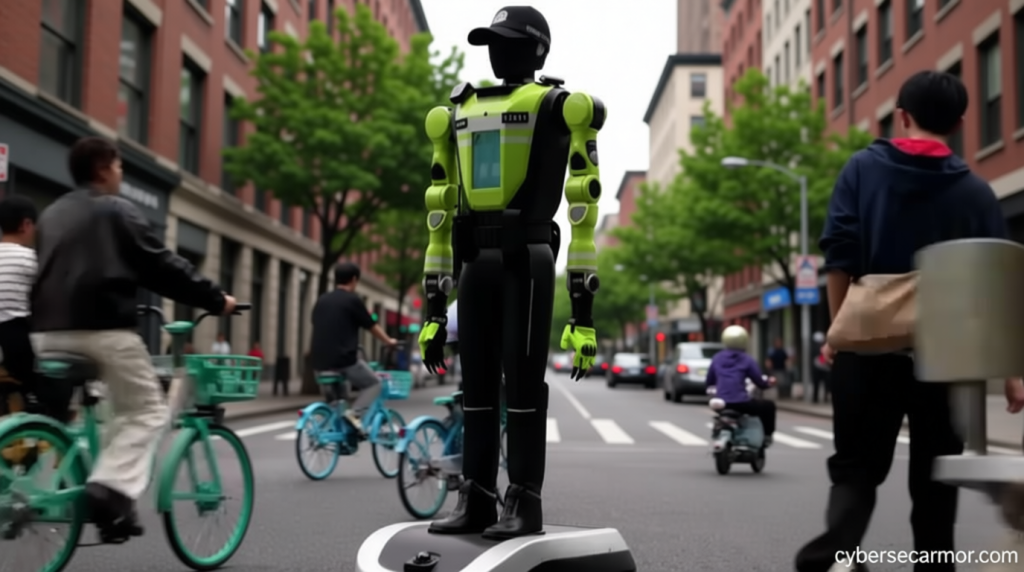
The humanoid robots, standing approximately 5 feet tall, were observed managing pedestrian and vehicular movement, using arm gestures to indicate traffic flow and engaging with bystanders. Their deployment marks a significant step in China’s efforts to merge cutting-edge robotics with daily civic operations. According to officials, the robots were tested in Hangzhou’s bustling downtown areas, where they demonstrated the ability to recognize and respond to traffic patterns, as well as interpret signals from drivers and pedestrians. This pilot program aims to evaluate how such technology can complement traditional policing methods during high-demand periods.
“The introduction of these robots is a testament to how China is pioneering the integration of AI into public life,” said a city transport spokesperson. “They provide a scalable solution to manage traffic flow, especially when human resources are stretched thin.”
Design and Functionality of the Humanoid Units
Each robot is powered by a combination of machine learning algorithms and computer vision technology, allowing them to adapt to dynamic environments. Their ability to communicate in multiple languages, including Mandarin and English, ensures they can interact with both local residents and international visitors. The units are also fitted with cameras, speakers, and motion sensors, enabling them to monitor road conditions and issue alerts for potential hazards. While their primary role is to direct traffic, they are programmed to perform secondary tasks, such as guiding lost tourists or providing real-time updates on public transportation schedules.
Authorities emphasized that the robots operate under the supervision of human officers, who can intervene if needed. The machines are not intended to replace human personnel but to augment their capabilities. For example, during the May holiday, when thousands of visitors flock to Hangzhou’s cultural landmarks, the robots help分流 (direct) crowds and manage vehicle queues, freeing officers to focus on more complex tasks. This hybrid approach highlights a balance between innovation and reliability, ensuring public safety remains a top priority.
Public Reaction and Media Attention
The deployment of the robots has generated widespread interest, both in the media and among the public. Onlookers stopped to take photographs and videos, with many expressing admiration for the futuristic setup. A local high school student remarked, “It’s amazing to see robots helping us navigate the streets. They’re like walking traffic lights!” Others, however, raised questions about the long-term implications of relying on machines for such critical roles. “What happens if a robot malfunctions during a rush hour?” asked a passerby, underscoring concerns about technology’s role in everyday governance.
Despite these concerns, the initiative has been met with optimism by tech enthusiasts and urban planners. “This is a milestone for AI applications in public infrastructure,” noted an expert in smart city development. “It shows how robotics can address real-world challenges while maintaining a human touch.” The robots’ presence also sparked discussions about the future of work, with some speculating that similar technologies could be adopted in other sectors, such as retail or healthcare, to streamline operations.
Broader Implications for China’s AI Strategy
Hangzhou’s experiment is part of a larger national strategy to position China as a global leader in artificial intelligence. The city, home to tech giants like Alibaba and startups such as DeepSeek, has long been at the forefront of innovation. By deploying humanoid robots in public spaces, local authorities are testing the scalability of AI-driven solutions for urban challenges. This move aligns with the Chinese government’s push to promote automation in industries ranging from manufacturing to transportation, with the goal of reducing labor costs and improving service delivery.
Experts predict that such technologies will become more prevalent in the coming years. “We’re seeing a shift from AI being a tool for convenience to a necessity for efficiency,” said Dr. Li Wen, a researcher specializing in robotics. “These robots are just the beginning of a trend where AI will play a central role in managing city logistics.” The success of the pilot program could influence policies in other major cities, including Shanghai and Shenzhen, which are also exploring AI applications for traffic control and public safety.
In addition to their practical benefits, the robots have become a symbol of China’s technological ambition. Their sleek designs and advanced capabilities have captured the imagination of the public, with social media platforms buzzing about the novelty of the setup. Hashtags like #RobotsOnTheRoad and #HangzhouTech have trended, reflecting both enthusiasm and curiosity about the future of human-machine collaboration. The robots’ ability to engage with people also suggests a broader vision of AI as a social companion, capable of fostering interaction and improving user experience in public spaces.
As the May holiday season concludes, officials plan to assess the performance of the robots and determine whether to expand their use beyond temporary deployments. The city’s traffic management department has already begun planning for a permanent integration of AI-powered units in key locations, with the aim of creating a more responsive and intelligent transportation network. This initiative underscores China’s commitment to using technology not just for economic growth but also for enhancing the quality of life for its citizens.
The robots’ introduction has also raised questions about their adaptability to different urban environments. While Hangzhou’s tech-savvy population has embraced the innovation, smaller cities may face challenges in adopting similar systems due to differences in infrastructure and resource allocation. Nevertheless, the success of this project could serve as a blueprint for nationwide implementation, particularly in densely populated areas where traffic management is a persistent issue. As AI continues to evolve, its role in public services is expected to expand, reshaping how cities operate and interact with their residents.
In conclusion, Hangzhou’s use of humanoid robots in traffic control represents a bold step toward the future of urban living. By combining cutting-edge technology with practical applications, the city is setting a precedent for other regions to follow. As the world watches, the integration of AI into everyday tasks may redefine what it means to have a smart city, where robots and humans work in harmony to create safer, more efficient, and more connected communities.

