Tom Brady slaps Logan Paul, expresses desire for a WWE match

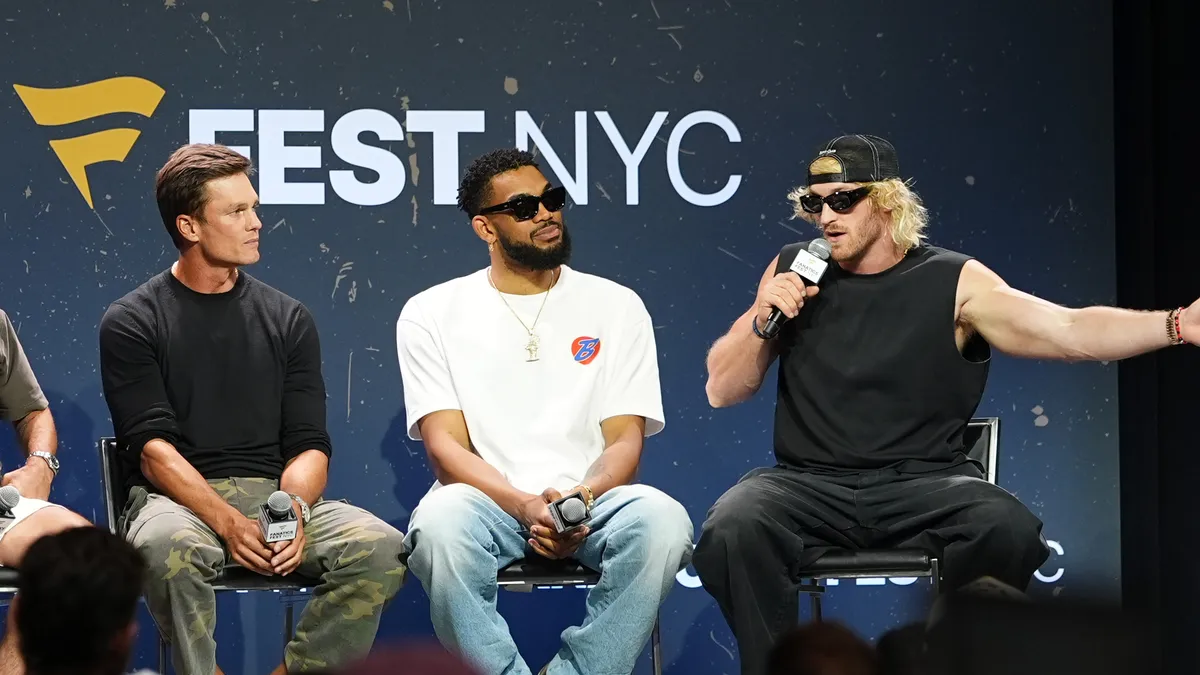
Brady and Paul’s On-Stage Moment Highlights Growing Rivalry
Cybersecarmor.com – A moment captured on video has fans buzzing about whether Tom Brady is orchestrating another publicity stunt. The legendary quarterback, who has won seven Super Bowl titles throughout his illustrious career, delivered a slap to Logan Paul during their appearance on stage at Fanatics Fest 2026. The encounter took place on Friday and quickly became one of the event’s most talked-about moments.
What began as a casual interaction escalated when the two personalities found themselves face-to-face. New York Knicks forward Karl-Anthony Towns stepped in to prevent the situation from getting out of hand, holding back Paul as tensions rose between the football icon and the YouTube sensation.
Social Media Reactions and Ongoing Tensions
Later that same evening, Brady took to social media platforms to share his thoughts on the encounter. In one post, he referred to Paul as a “dork,” while in another message, he labeled the internet personality a “nerd.” These playful jabs have become a hallmark of their growing rivalry.
“You might wear a helmet − that ball might get loose in my hand and if you’re not paying attention,” Brady told Paul at the draft ahead of the flag football game.
This apparent feud has been building momentum over several months. Both Brady and Paul have been exchanging trash talk both before and during the Fanatics Flag Football Classic. According to Paul, Friday’s on-stage confrontation was directly related to that flag football game, which apparently left both men with something to say about each other.
The origins of this rivalry can be traced back to February, when Paul made a bold claim to Brady. The WWE star suggested that his time in professional wrestling had made him just as athletic as players in the National Football League. This comment set the stage for what would become a months-long exchange of verbal jabs.
Brady’s WWE Ambitions Take Center Stage
Logan Paul, much like his brother Jake, has built a successful career on his ability to generate attention through trash-talking. His position as a WWE superstar provides him with a massive platform to challenge and provoke his rivals, both inside and outside the ring.
Brady proved his words were not empty when he followed through on a pregame threat during the flag football matchup in March. The NFL legend threw a football directly at Paul during the game, demonstrating that he was willing to back up his comments with action.
“I need to get an invite. I’ve been waiting for [WWE president] Nick Khan to come up with some storyline for me to get in the mix,” Brady said on Thursday. “I feel like I’m retired from football, and I have an opportunity to go out there and still showcase that I’m a little bit of an athlete.”
On the opening day of this week’s four-day Fanatics Fest event, Brady had another opportunity to voice his wrestling aspirations. Speaking with WWE superstar Cody Rhodes on the “What Do You Wanna Talk About?” podcast, which was broadcast live from the festival, Brady expressed his eagerness to step into a WWE ring.
Now that the 48-year-old quarterback has publicly stated his interest in professional wrestling, everyone is waiting to see what happens next. However, fans hoping to see Brady face Paul in the near future may need to exercise patience. The WWE star is currently in recovery mode after suffering a torn triceps injury on May 23, which has sidelined him from competition.
The combination of Brady’s football legacy and Paul’s wrestling credentials creates an intriguing narrative that could captivate audiences across multiple sports. Whether this results in an actual match remains to be determined, but the groundwork has certainly been laid for what could become one of the most anticipated crossover events in recent sports history.