
‘We’re sinking deeper’: Iranians brace for infrastructure strikes as Trump deadline nears
‘We’re sinking deeper’: Iranians brace for infrastructure strikes as Trump deadline nears
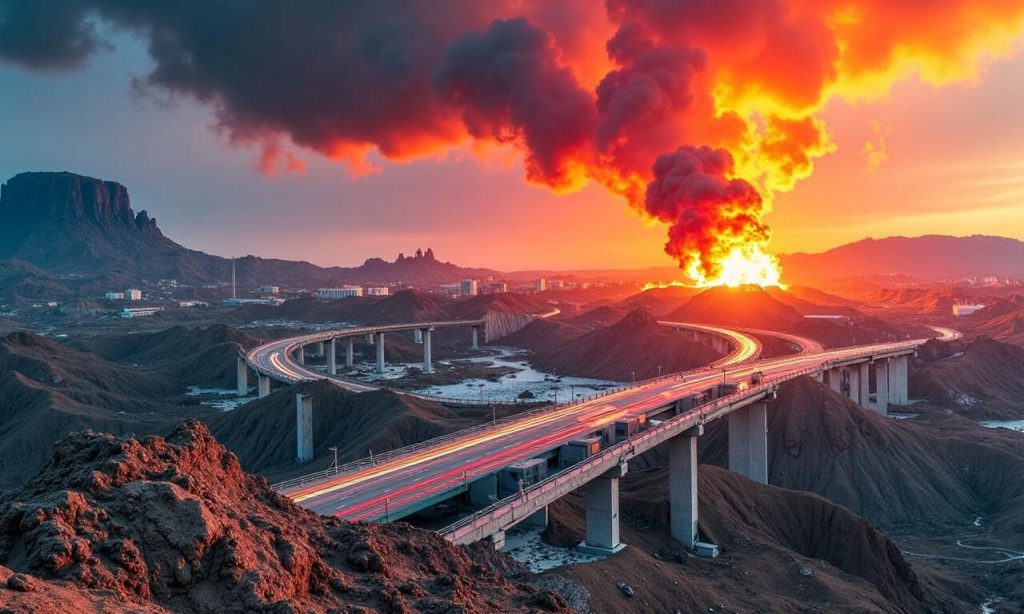
As the deadline set by US President Donald Trump approaches, ordinary Iranians are increasingly anxious about potential attacks on critical infrastructure. The president’s recent social media post, filled with expletives, declared that “Tuesday will be Power Plant Day, and Bridge Day, all wrapped up in one, in Iran. There will be nothing like it!!!” This threat has sparked widespread concern, with many citizens feeling powerless against the looming disruption.
A presidential aide dismissed Trump’s timeline as a “display of sheer desperation and anger,” highlighting the Iranian government’s mockery of the 20:00 ET (01:00 BST Wednesday) ultimatum. Despite the internet blackout enforced by authorities over five weeks ago, the BBC has managed to connect with several Iranians who oppose the current regime. Their identities remain concealed for safety, as they share their fears about the impending strikes.
“It feels like we’re sinking deeper into a swamp. What can we do as ordinary people? We can’t stop him [Trump]. I keep thinking about a scenario where, in a month, I’m sitting with my family with no water, no electricity, nothing. And someone blows out the candle and we go to sleep.”
While state television broadcasts images of well-stocked grocery stores, whispers of stockpiling suggest a growing unease. Mina, a young woman from Tehran, described her mother’s efforts to fill every available bottle with water. “I’ve no idea what we’re going to do now. I think more and more in Iran have realised that Trump doesn’t care about them at all. I hate him from the bottom of my heart, and hate those who support him too.”
Trump’s promise of support during January’s anti-government protests has faded. At the time, he claimed “help is on its way,” but his actions did not prevent a brutal crackdown. According to the Human Rights Activists News Agency, at least 6,508 protesters were killed, and 53,000 arrested. Many who initially viewed US-Israeli strikes as a sign of aid now fear energy attacks as a tipping point.
“I’ve thanked Israel and the US for almost all of what they’ve hit so far. They must have had good reasons for them [sites which have been hit]. But I swear, hitting a power station just paralyses the country. It just plays into the Islamic Republic’s hands.”
Radin, a young man in Tehran, expressed a grim acceptance of potential destruction. “About them hitting energy infrastructure, using an atomic bomb, or levelling Iran. My honest reaction is that I’m OK with all of these. Or anything else they might have in mind. If attacking targets in the country brings down the Islamic Republic, I’m fine with that. Because if the Islamic Republic survives this war, it will stay forever.”
The economic strain of the conflict is also evident. Bahman, a Tehran resident, noted that “Trump is scared of what Iran is going to do. I’m sure that Iran will hit everywhere in the region in retaliation.” His daily routine has been disrupted, as he works as a building superintendent engineer. “No-one is building anything right now. Some smaller companies have started to lay off their employees already.”
Meanwhile, Jamshid, who runs a restaurant in Tehran, described the toll on his business. “I’m not optimistic about the situation. I estimate that I can hold this up for a month, maybe two, at most. The rent is breaking my back. It’s 200m tomans a month [approx. $1,270; £960; €1,100].” This cost is steep compared to the average monthly salary, which ranges between $200 and $300.
Internet access, already a luxury, remains costly. Most rely on shared connections through individuals with Starlink systems, though using or possessing the technology carries a penalty of up to two years in prison. Authorities have reportedly intensified searches for those utilizing it, further complicating efforts to stay informed.
