Attorneys spar over video release during Charlie Kirk murder hearing

Legal Battle Over Public Access to Key Interview in Charlie Kirk Case
Cybersecarmor.com – During a pivotal preliminary hearing in Utah on July 8, 2026, legal representatives engaged in vigorous debate regarding the public disclosure of a critical police interview. The discussion centered on whether testimony from Lance Twiggs, who is both the roommate and romantic partner of the accused, should be presented openly or kept confidential. Jeffrey Neiman, representing the Kirk family, argued forcefully that maintaining secrecy would undermine public confidence in the judicial process.
Setting the Stage for the Hearing
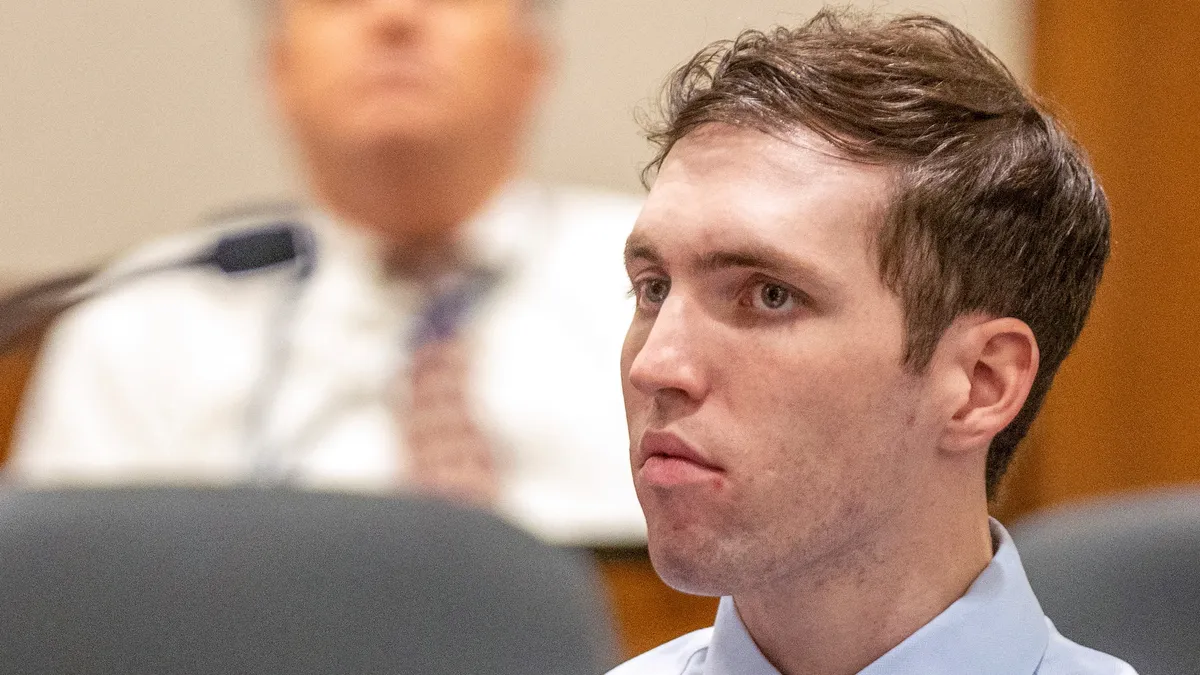
The weeklong proceedings are examining whether sufficient evidence exists to send Tyler Robinson, age 23, to trial for the September assassination of Charlie Kirk at Utah Valley University. Throughout hours of arguments, attorneys on both sides presented their positions regarding the potential impact of media coverage on the defendant’s constitutional rights.
Twiggs received immunity from prosecution in return for providing information to authorities. This legal arrangement means that while his statements can be presented as evidence, they cannot be used to charge him with any crimes. Prosecutors wanted to present the interview footage directly in the courtroom, but defense counsel raised serious objections about the presence of news cameras that would transmit the contents globally.
Arguments for and Against Transparency
Neiman emphasized that the Kirk family strongly believes all evidence admitted during the preliminary hearing deserves public scrutiny without any modifications. He stated that the court possesses adequate mechanisms to protect Robinson’s fair trial rights if necessary.
“The Kirk family believes strongly that if the evidence is being admitted to this preliminary hearing, it should be made public for the world to see. No redactions,” Neiman declared. “This court has tools at its disposal to make sure the defendant receives a fair trial. You’ll use them if you find that you need to.”
The family attorney continued by explaining that withholding transparency would generate uncertainty and skepticism regarding the judicial system’s operations. He stressed that openness about what transpired would serve the interests of justice more effectively than keeping proceedings behind closed doors.
Defense attorney Richard Novak acknowledged the validity of the Kirk family’s perspective while highlighting the state’s concern that the interview might be interpreted as a confession. He referenced Supreme Court precedent indicating that the public must await the jury trial to hear certain evidence.
“There are some things which the Supreme Court has said: The public has to wait for the jury trial in order to hear evidence,” Novak explained. “With all due respect to the Kirk family, and with all due respect to the media, and with all due respect to the public, the No. 1 concern in this proceeding is Mr. Robinson’s right to a fair trial.”
The Judge’s Decision
After reviewing arguments from both parties and posing questions to each side, Judge Tony Graf ordered prosecutors to edit the video before its scheduled presentation on Thursday, July 9. While the ruling mandated redactions, the judge did not specify the extent of changes required.
“I recognize the importance of transparency. I also recognize the importance of balancing constitutional rights and it’s a fine line,” Graf noted. “I’m balancing all these competing rules, constitutional rights, as well as transparency. And sometimes it is an imperfect balancing act but I’m trying to act in the interest of justice in making this balancing act, and for transparency to actually be transparent.”
Additional Evidence Presented
Earlier portions of the hearing on July 6 and 7 featured graphic video of Kirk’s shooting. Prosecutors also called law enforcement witnesses who supported their position that Robinson fired the fatal shots during a September gathering at Utah Valley University. Robinson faces charges including aggravated murder, and Utah County Attorney Jeff Gray has indicated intentions to pursue capital punishment.
Testimony covered the disorganized response when authorities began searching for the shooter. New surveillance recordings displayed in court allegedly showed Robinson arriving at campus and subsequently leaving with an item in his possession.
David Hull, formerly an investigator with the State Bureau of Investigation, testified that Robinson made four campus visits on September 10 and 11. During these visits, Robinson interacted with members of Turning Point USA, Kirk’s organization. Hull observed Robinson approaching a wooded area twice, where investigators later discovered the rifle allegedly used in the killing, wrapped inside a towel.
Defense lawyers challenged law enforcement officials regarding security measures implemented before the event and the investigation that followed. They examined evidence including an unfired bullet and an additional firearm recovered on campus. On July 7, the defense called its initial witness, an FBI DNA analyst, to question the reliability of a report connecting Robinson to both the towel and a screwdriver found on the roof where investigators believe the lethal shot originated.
Though the proceedings continue, the debate over public access to evidence highlights the ongoing tension between maintaining judicial transparency and protecting the defendant’s right to an impartial trial.