
Cuban president promises ‘impregnable resistance’ to any US attempt to control island
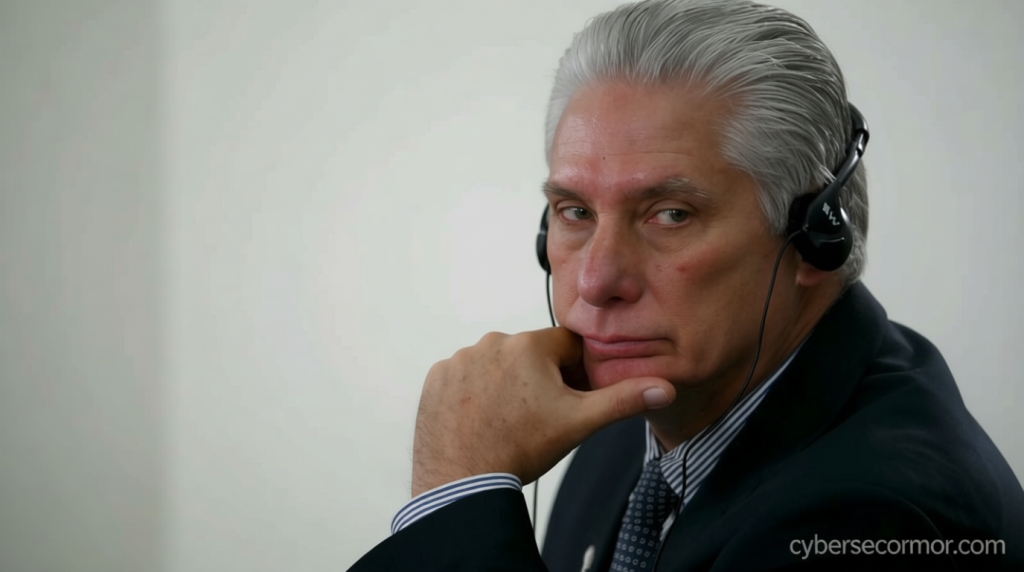
Cuban President Vows Unyielding Resistance to U.S. Control
Cuban leader Miguel Díaz-Canel declared Tuesday that the United States would face an “impregnable resistance” if it attempted to seize control of the island. The promise came as electricity began to trickle back to certain regions after a nationwide power grid failure disrupted life across Cuba.
For over six decades, successive U.S. administrations have aimed to isolate Cuba, Díaz-Canel noted in a defiant X post. He accused Washington of leveraging Cuba’s current economic struggles as an “outrageous pretext” to justify its aggressive stance. “This explains the relentless economic war, imposed as collective punishment on the entire population,” he stated.
Díaz-Canel emphasized Cuba’s resolve: “In the face of the worst scenario, the nation stands firm, knowing that any external aggressor will encounter an unbreakable resistance.”
U.S. President Donald Trump had previously mocked Cuba’s communist leadership, threatening a takeover. On Monday, he suggested he could take any action against the island, and by Tuesday, he reiterated: “We’ll be doing something with Cuba very soon.”
Secretary of State Marco Rubio followed up, stating from the Oval Office that Cuba needs “new leadership.” “Their economy doesn’t work… They’re in a lot of trouble, and the people in charge, they don’t know how to fix it,” Rubio remarked.
Power Grid Collapse Exacerbates Cuba’s Struggles
Cuba’s economic woes deepened when the U.S. blocked its oil supply earlier this year, depriving the nation’s outdated electricity network of its primary fuel source. On Monday, nearly all of the island’s 10 million residents were without power, forcing them to cook with gas torches and candles.
Without electricity, waste collection vehicles halted, leaving trash piling up in some areas. Schools shortened hours, and sports events were delayed as daily life faltered under the crisis.
By Tuesday afternoon, about 55% of Havana residents and some parts of the western and central-eastern regions had regained power. However, the outages worsened existing hardships, with Cubans enduring frequent blackouts for months.
Public Response to U.S. Threats
Despite the looming possibility of U.S. intervention, Havana resident Marianela Alvarez told Reuters that Cubans seek peace over conflict. “As civilians, we’re not ready for war,” she said. “I want Trump to understand and leave us alone.”
Luis Enrique Garcia, another local, expressed cautious optimism. “I believe dialogue and understanding will happen, because love, not war, should unite people,” he shared.
Yet, not all were hopeful. “I don’t trust a dialogue with Trump,” Havana’s Amed Echenique told Reuters. “Even with what I know of him, I don’t see hope in his approach.”
Cuban-U.S. Talks Confirm Ongoing Discussions
Díaz-Canel confirmed that Cuban officials had engaged in talks with the U.S. to “identify bilateral problems requiring resolution.” This marked the first official acknowledgment from Havana of ongoing negotiations, though Trump had earlier claimed Washington was already in discussions with Cuba.

