Whale sinks New Jersey firefighters’ boat, sending crew overboard

Whale Collision with Fireboat Sends Crew Overboard in New Jersey
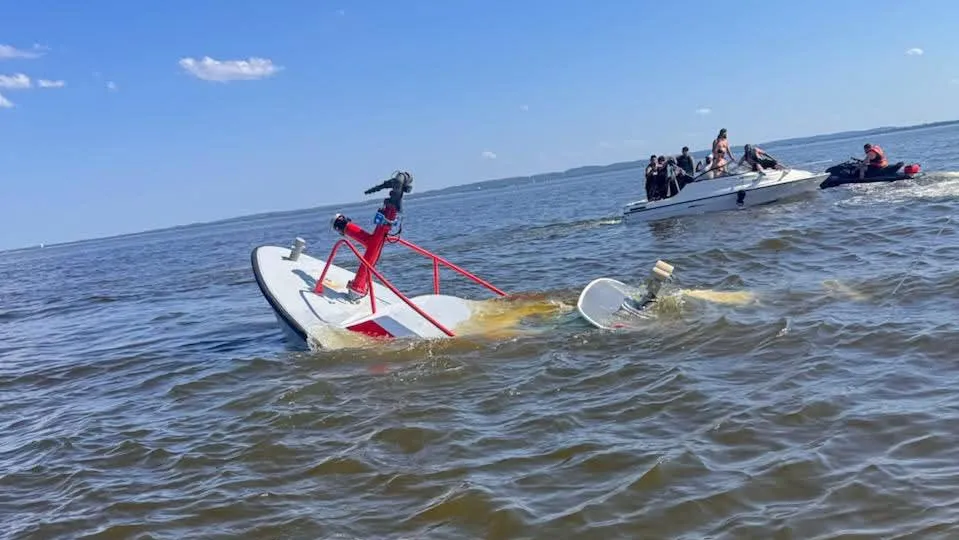
Cybersecarmor.com – On the Fourth of July, a dramatic collision occurred in the waters of New Jersey as a fireboat was struck by a breaching whale, resulting in catastrophic damage and forcing the crew to abandon the vessel moments before it submerged. The incident took place around 4:30 p.m. local time, south of the Arthur Kill tidal strait near the mouth of Raritan Bay, approximately 10 miles from Staten Island’s South Shore. According to the Carteret Fire Department & EMS Division, the marine unit had just completed a routine security patrol in the New York and New Jersey Port area when the event unfolded.
The fireboat was traveling back to its home waters when the whale breached beneath its stern, creating a sudden and powerful impact. The vessel’s structural integrity was compromised instantly, leaving the firefighters aboard with little time to react. “The boat immediately began taking on water, leaving the firefighters aboard only seconds to abandon the vessel,” the department stated in a news release issued on July 5. This unexpected collision has raised questions about marine safety protocols and the unpredictability of natural encounters in emergency response operations.
“Yesterday’s events serve as a powerful reminder that no matter how routine a mission may seem, every emergency response carries risks,” said the department in a statement. “We are incredibly grateful that every member made it home safely.”
Quick action by nearby rescuers was critical in ensuring the safety of all involved. A recreational jet ski operator and another boater on the scene immediately assisted in pulling the firefighters from the water. Members of the Perth Amboy Fire Department Marine Unit and the FMBA Local 58/258, chapters of the Firefighters’ Mutual Aid Benevolent Association, also joined the efforts to secure the crew’s safety in the channel. The combined response helped prevent any injuries, with all personnel surviving the incident unharmed.
According to the Carteret Fire Department, the collision occurred in a region known for its busy maritime traffic. A recreational vessel that had been in the vicinity reported observing a pod of whales breaching in the area before and after the incident. This detail has provided investigators with valuable context, though the full circumstances remain under review. The fire department emphasized that the event was an unusual occurrence for their marine unit, which typically handles water rescues, marine emergencies, vehicle incidents, and fire responses.
“An event of this nature is something no one anticipates,” the department added. “Understandably, it has left those involved shaken, but we are incredibly thankful that everyone returned home safely to their families.” The unit’s routine training for water-based emergencies has not prepared them for such a sudden and large-scale collision with marine life. The incident has prompted discussions about the need for additional safeguards, particularly in areas where aquatic wildlife and human activity intersect.
One key factor in the crew’s survival was the immediate use of life jackets. The department highlighted that every firefighter aboard was wearing a personal flotation device at the time of the collision. This precaution proved vital, as the rapid flooding of the boat left no time for a full evacuation. “The importance of proper safety equipment cannot be overstated,” said the department in another statement. “Even in the most routine scenarios, preparedness can mean the difference between a minor incident and a life-threatening situation.”
The Carteret Fire Department expressed gratitude for the swift assistance from multiple agencies, labor organizations, and public officials. Among those acknowledged was Carteret Mayor Dan Reiman, the Borough Council, the Jersey City Fire Department, and the New Jersey Regional Fireboat Task Force. These groups played a crucial role in coordinating the rescue and providing support to the affected crew. The department also praised the local community for its responsiveness during the crisis.
As the investigation into the incident continues, authorities are gathering more information about the whale’s behavior and the conditions in the water at the time of the collision. The whale’s species and size have not yet been confirmed, but its presence in the area suggests that the region is a frequent habitat for marine life. The Carteret Fire Department is working closely with marine biologists and local experts to understand the factors that may have contributed to the collision.
The event has sparked broader conversations about the safety of marine operations in shared waterways. Firefighters and boat operators are now reviewing protocols to better account for the risk of encountering large marine animals during routine missions. “This incident underscores the importance of vigilance and adaptability,” said the department. “Even in the most prepared teams, unexpected challenges can arise.”
Whale Collision: A Rare and Shocking Event
The Carteret Fire Department noted that such a collision is exceptionally rare for their marine unit, which has years of experience handling emergencies in the region. The unit’s regular training includes drills for various scenarios, such as navigating through congested waterways or responding to vessel malfunctions. However, the sudden impact of a large whale beneath the boat was a scenario not typically rehearsed.
Residents and officials in the area have expressed concern over the incident, highlighting the need for increased awareness of marine wildlife activity. The Arthur Kill tidal strait, where the collision occurred, is a critical waterway connecting the Hudson River and the Raritan Bay. Its proximity to Staten Island and the frequent passage of commercial and recreational vessels make it a high-risk zone for unexpected encounters.
“The sheer force of the whale’s breach was enough to send the boat into the water,” remarked a fire department spokesperson. “It was a moment of pure chaos.” The crew, who had just finished their patrol, was caught off guard by the sudden impact. Witnesses described the scene as a mix of panic and coordination, with multiple boats converging to assist in the rescue.
The department also pointed out the significance of the incident in the context of coastal safety. “This event reminds us that our emergency responders are not only prepared for human-made dangers but also for the natural ones,” said a statement from the organization. The survival of all crew