Extreme heat scorches July Fourth celebrations. How to stay safe

Extreme Heat Disrupts July 4th Celebrations Across the U.S.
Cybersecarmor.com – A persistent heat dome is casting intense heat across the nation on July 4, creating hazardous conditions for traditional Independence Day events. From the Northeast to the South, temperatures are expected to soar 10 to 20 degrees above average, turning outdoor festivities into potential risks. The National Weather Service (NWS) has issued a series of extreme heat warnings, highlighting the danger of sweltering conditions that could challenge even the most seasoned summer enthusiasts.
State Leaders Issue Urgent Warnings
As the heat intensifies, state officials are urging residents to take precautions. New Jersey Governor Mikie Sherrill, for instance, emphasized the need for vigilance on social media, advising people to limit their time outdoors during peak heat and prioritize hydration. Similarly, Virginia Governor Abigail Spanberger warned of the strain on emergency services, encouraging citizens to adopt protective measures to avoid overwhelming healthcare systems.
“Please be cautious of the extreme heat. Limit your time outdoors – especially during the hottest times of the day – and drink plenty of water,” Sherrill tweeted.
Washington, D.C. Mayor Muriel Bowser also highlighted the severity of the situation, noting that the city’s annual Independence Day parade was canceled due to record-breaking temperatures. “It’s going to be a very long, busy, hot day in DC. With temps over 100°, it’s important to be mindful about drinking water, seeking shade, and limiting time outdoors,” Bowser shared on X.
Heat Index Threatens Records
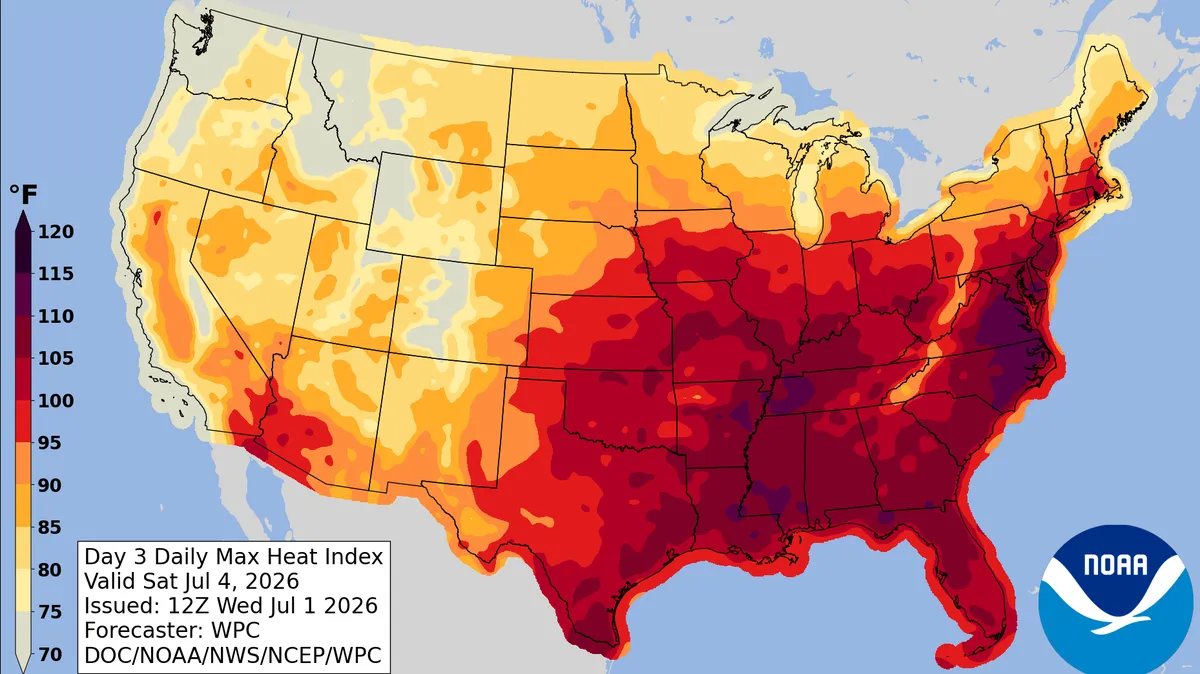
Regions such as Maryland, Virginia, and Washington, D.C. face heat index values of 110 to 115 degrees, making the air feel even more stifling. In Richmond, Virginia, the heat index could reach a staggering 115°F, potentially shattering the city’s previous high. Meanwhile, in Raleigh-Durham, North Carolina, the forecast suggests a new record may be set, with temperatures hitting 110°F. Even in Memphis, Tennessee, the heat index is predicted to surpass 109°F, underscoring the widespread nature of the crisis.
Meanwhile, across the Midwest and South, the NWS has expanded its heat warning coverage, including states like Tennessee, Indiana, and Kentucky. Southern California and southwest Arizona have also been placed under extreme heat watches, with forecasts indicating prolonged exposure to dangerously high temperatures.
Heat-Related Risks and Vulnerable Groups
While the heat is a challenge for all, certain groups are particularly at risk. The NWS noted that young children and infants are more susceptible to heat-related illnesses due to their limited ability to regulate body temperature. Similarly, pregnant women, individuals with chronic health conditions, and older adults – especially those with pre-existing ailments – are advised to take extra care. Leaving children or pets unattended in vehicles during these conditions could lead to life-threatening situations.
Residents are also being urged to reduce energy consumption to ease pressure on the power grid. New York Governor Kathy Hochul called for conserving electricity by adjusting air conditioning settings to between 75 and 78 degrees, ensuring that cooling resources remain available for those who need them most.
Adapting to the Heatwave
Communities are responding with practical solutions to combat the sweltering conditions. In New York City, Mayor Zohran Mamdani encouraged citizens to use cooling centers if needed, offering a lifeline for those without access to air conditioning. Philadelphia’s Emergency Management Office also shared information about local cooling centers, ensuring residents can find relief during the dangerous heatwave.
With many areas anticipating temperature records to be broken, the National Oceanic and Atmospheric Administration (NOAA) provided a breakdown of heat index projections. From the Mid-Atlantic to the Midwest, heat index temperatures are expected to range between 105 and 115 degrees, with specific warnings for New Jersey and parts of New York City, where the index could hit 107°F. Kansas City and St. Louis in Missouri and Kansas are also on alert for heat index values up to 105°F.
Staying Safe in the Heat
As the weather heats up, experts stress the importance of proactive measures. Staying hydrated, seeking shade, and avoiding prolonged exposure to the sun are key strategies to prevent heat exhaustion or heatstroke. For those who must be outside, wearing light, breathable clothing and taking frequent breaks can make a significant difference.
Parents and caregivers are reminded to keep children cool and monitor for signs of distress. The NWS reiterated that heat can strike unexpectedly, even during what seems like a routine day. With the risk of heat-related illnesses on the rise, it’s crucial to stay informed and adapt to the conditions. The Heat.gov Zip code search tool offers real-time updates for individuals looking to assess their local situation.
Impact on Celebrations and Daily Life
While the heat is dampening traditional festivities, it’s also reshaping how people celebrate. In Washington, D.C., where President Donald Trump is set to deliver a “really long speech” on Saturday night, the sweltering conditions could set a new all-time high. The previous record of 100°F, established in 1919, might be eclipsed as temperatures climb to 101°F.
For many, the heatwave is a test of resilience. Families are adjusting plans, opting for indoor gatherings or evening activities to avoid the midday heat. Farmers and outdoor workers, in particular, are advised to schedule tasks during cooler hours, while others are encouraged to check on neighbors and loved ones who may be more vulnerable.
As the heatwave peaks, the message remains consistent: prepare, adapt, and stay cautious. Whether it’s through simple steps like drinking water or using cooling centers, the focus is on preventing the worst outcomes of extreme heat. With July 4 serving as a stark reminder of the power of the weather, the nation is being called to action to protect itself from the dangers of this unprecedented summer.