Tibetan man dies after setting himself on fire near UN HQ, activists say

Tibetan Man Dies After Self-Immolation Near United Nations Headquarters, Activists Say
Cybersecarmor.com – On Thursday, authorities in New York City confirmed the death of a man who succumbed to severe burns near the United Nations headquarters. The incident occurred around 6:30 p.m. ET, when emergency responders arrived at the scene to find him critically injured. Police have not disclosed his identity or the specific cause of his actions, stating that an investigation is underway to determine the circumstances.
Activist Identification and Context
According to Voice of Tibet, an exile-based media outlet, the deceased was identified as Lobga Rangzen, a Tibetan activist who took his own life in a symbolic gesture of protest. The group stated that Rangzen “self-immolated outside the UN headquarters in New York after a live appeal for Tibetan independence and unity.” This act, they emphasized, was intended to draw international attention to the ongoing struggle for autonomy in Tibet.
“He was enraged by the restrictions the Chinese government had placed on his countrymen,”
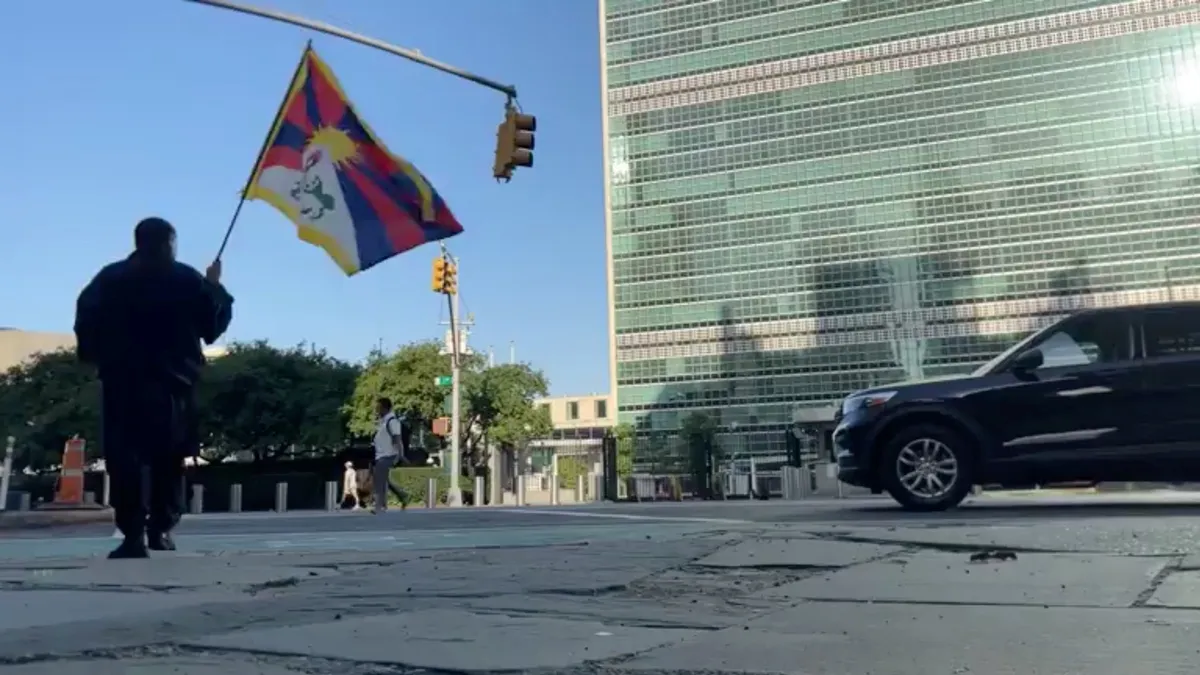
shared Lobsang Paljor, an Uber driver who knew Rangzen from community gatherings. Paljor, as reported by local news site amNewYork, described Rangzen’s passion for Tibetan rights and his frustration with the policies affecting his people. The report also noted that Rangzen had arrived at the UN with a Tibetan flag, underscoring the significance of his protest.
Ethnic Unity Law and Global Concerns
The United States and the European Union have raised alarms over China’s recent ethnic unity law, which took effect this week. This legislation provides Beijing with the legal authority to penalize individuals outside its borders for activities perceived as threatening national unity. For Tibetans, the law has been interpreted as a tool to suppress dissent and reinforce loyalty to the Chinese state.
Activists argue that the law’s emphasis on a “shared” national identity among Tibetans and other ethnic minorities, such as Uyghurs, reflects a broader effort to assimilate distinct cultural groups. This approach has drawn criticism from Tibetan communities worldwide, who see it as a direct challenge to their heritage and political aspirations.
Historical Control Over Tibet
China’s claim over Tibet dates back to 1950, when it asserted control over the region in what it calls a “peaceful liberation” from feudal serfdom. Since then, the government has implemented policies aimed at integrating Tibet into the broader Chinese administrative framework. Under President Xi Jinping, who assumed leadership in 2012, these measures have intensified, with greater institutional oversight and surveillance targeting individuals suspected of advocating for separatism.
Tibetans, both within the region and in exile, have long opposed these policies. Their resistance has taken various forms, including protests, demonstrations, and acts of self-immolation. The latest incident near the UN headquarters adds to a growing pattern of such symbolic gestures, which activists say highlight the deepening discontent among Tibetans.
Previous Acts of Resistance
According to the International Campaign for Tibet, there have been over 150 documented cases of self-immolations by Tibetans between 2009 and 2022. These acts, often performed in public spaces, have become a powerful expression of defiance against Chinese rule. The campaign notes that 10 of these self-immolations occurred while the individuals were living abroad, underscoring the global reach of Tibet’s struggle.
“He was a tireless advocate for Tibet,”
declared Tencho Gyatso, president of the International Campaign for Tibet, following the news of Rangzen’s death. Gyatso expressed deep sorrow at the loss, emphasizing the man’s commitment to his people’s cause. Such acts, he explained, are not just personal sacrifices but also a way to galvanize support from international audiences.
China’s Response and Institutional Measures
At a news conference on Friday, Chinese Foreign Ministry spokesperson Guo Jiakun reiterated the government’s stance, asserting that Tibet has been an inseparable part of China since ancient times. He claimed that “relevant countries will handle the matter in accordance with domestic laws,” suggesting that the U.S. and EU should align their actions with their own legal frameworks.
Despite this, international human rights organizations and exiled Tibetan groups continue to criticize China’s policies as oppressive. They highlight the heavy surveillance and restrictions placed on Tibetans, both in their homeland and in diaspora communities, as part of a strategy to stifle dissent. China, however, maintains that these measures are necessary to maintain stability and unity.
Significance of the Protest
The timing of Rangzen’s self-immolation near the UN headquarters is symbolic, as it occurs during a period of heightened international scrutiny of China’s treatment of ethnic minorities. His act of protest is part of a broader movement that has seen Tibetans use self-immolation as a form of resistance, particularly in response to policies that limit their cultural and political freedoms.
For many Tibetans, the self-immolation is a dramatic statement of their resolve to reclaim autonomy. It reflects a deep sense of grievance over perceived injustices, including restrictions on religious practices, language, and historical narratives. The act also serves as a reminder of the ongoing tensions between the Chinese government and the Tibetan people, despite decades of control.
As the investigation into Rangzen’s death continues, questions remain about the broader implications of his sacrifice. His actions have reignited discussions about the role of international institutions in addressing human rights concerns in Tibet, while also shedding light on the personal and political motivations behind such protests. The incident underscores the persistent struggle for Tibetan independence and the lengths to which activists are willing to go to draw global attention to their cause.