Navy searching for missing crew member after ’emergency water landing’

Navy Searching for Missing Crew Member After Emergency Water Landing
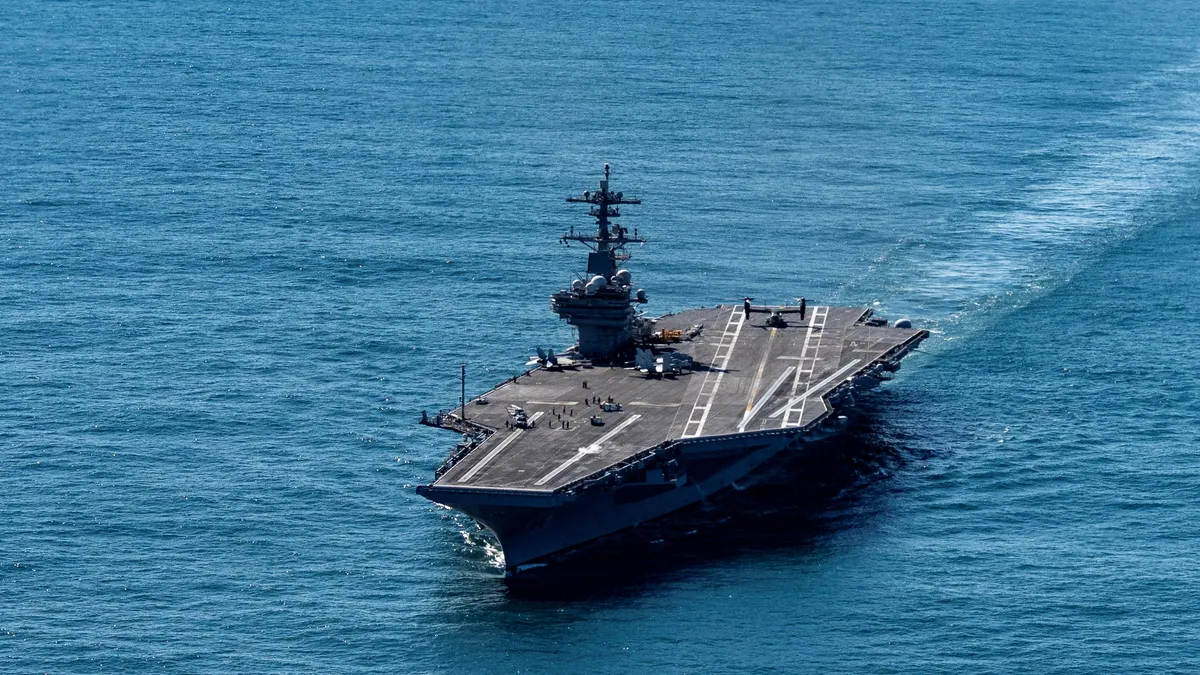
Cybersecarmor.com – The U.S. Navy has initiated a search operation to locate a missing aircrewman following an emergency water landing by an MH-60S Sea Hawk helicopter in the Arabian Sea. According to officials, the incident occurred early on July 1, with the aircraft carrier USS George H.W. Bush serving as the base of operations. While the exact cause of the emergency remains under investigation, there is currently no evidence pointing to hostile action as the trigger.
Incident Details and Rescue Efforts
The MH-60S Sea Hawk, a versatile maritime helicopter, made the emergency landing at approximately 3:30 a.m. ET on July 1, as confirmed by U.S. Naval Forces Central Command and the U.S. 5th Fleet. Three crew members were successfully recovered and are reported to be in stable condition aboard the carrier. However, the fourth member of the flight team is still missing, prompting an extensive search and rescue mission.
“There is no indication the emergency was caused by hostile action,” stated Navy officials, emphasizing that the incident is being treated as an operational mishap. The search teams are deploying sonar equipment and life-saving gear to locate the missing individual, who may have fallen into the sea during the landing.
The Arabian Sea has been a critical area for U.S. military operations in recent months, particularly as tensions in the Middle East have escalated. The USS George H.W. Bush, part of a larger naval task force, has been actively engaged in patrol and surveillance missions, maintaining a visible presence to deter potential threats and support regional allies.
Background on U.S.-Iran Tensions
Amidst the ongoing conflict between the United States and Iran, which began on February 28 with a joint Israeli bombing campaign targeting Iranian positions in the Middle East, the region has remained a hotspot for military activity. Despite a fragile ceasefire agreement brokered in recent weeks, the situation continues to simmer, with both sides exchanging fire and conducting operations in the area.
Recent events have heightened the stakes for U.S. forces in the region. On June 9, Iran downed an American Apache helicopter near the Strait of Hormuz, prompting a swift retaliatory response from the United States. The two pilots aboard the Apache were unharmed and safely evacuated, according to a statement from President Donald Trump. This incident, coupled with the latest emergency involving the Sea Hawk, underscores the volatile nature of the maritime environment and the risks faced by U.S. personnel.
“The two pilots on board were unharmed and safe,” declared President Donald Trump, highlighting the resilience of U.S. military personnel in the face of escalating tensions. His comments reflect the broader narrative of American efforts to protect its interests while navigating a complex geopolitical landscape.
The Navy’s emergency water landing incident comes as Central Command continues to emphasize the operational readiness of the USS George H.W. Bush. On June 23, the command reiterated that the carrier remains a key asset in the Arabian Sea, alongside another U.S. aircraft carrier, as forces maintain a vigilant posture. The ship’s role in the region extends beyond combat, encompassing humanitarian missions and support for allied nations.
Helicopter Missions and Strategic Importance
The MH-60S Sea Hawk is a critical component of the U.S. Navy’s fleet, designed for a range of missions including anti-surface warfare, combat search and rescue, and humanitarian disaster relief. Its ability to operate in challenging environments, such as the open waters of the Arabian Sea, makes it an essential tool for maintaining naval superiority and responding to crises.
Central Command shared images of sailors conducting nighttime operations aboard the USS George H.W. Bush, showcasing the carrier’s capability to support continuous military activity. These visuals include footage of the MH-60S Sea Hawk being maintained and prepared for deployment, underscoring the importance of such aircraft in ensuring operational flexibility.
While the emergency landing is a localized event, it has sparked renewed discussions about the safety of U.S. naval operations in the region. The incident highlights the need for robust protocols to handle unexpected situations, especially in waters where both friendly and adversarial forces are active. Navy officials have not yet confirmed whether the crew member who went missing is still at large or if the situation has been resolved.
Additionally, the presence of the USS George H.W. Bush in the Arabian Sea is part of a broader U.S. strategy to project power and reinforce alliances. The ship’s deployment reflects the commitment of the U.S. military to remain engaged in the region, even as diplomatic efforts seek to ease the situation between the U.S. and Iran.
Broader Implications and Future Outlook
The emergency water landing serves as a reminder of the dangers inherent in naval operations, particularly in the high-stakes environment of the Arabian Sea. With the war between the U.S. and Iran continuing to impact the region, every incident carries the potential to influence diplomatic and military strategies.
Analysts suggest that the presence of U.S. aircraft carriers in the area acts as a deterrent to potential aggressors, while also providing a rapid response capability for emergencies. The search for the missing crew member will be closely watched, as it may offer insights into the challenges of operating in such a dynamic region.
As the investigation into the cause of the emergency progresses, the focus will remain on ensuring the safety of U.S. personnel and maintaining operational efficiency. The Navy’s ability to conduct such missions under pressure will be a key factor in its continued role as a dominant force in the Middle East.
With thousands of lives lost in the conflict since its outbreak, the incident underscores the human cost of military engagements in the region. The MH-60S Sea Hawk’s emergency landing is not only a technical challenge but also a symbol of the risks taken by those serving on the front lines. The outcome of the search will be crucial in assessing the impact of the incident on both the crew and the broader U.S. military presence in the Arabian Sea.