
A pivotal chapter of American history is closing with Jesse Jackson’s death
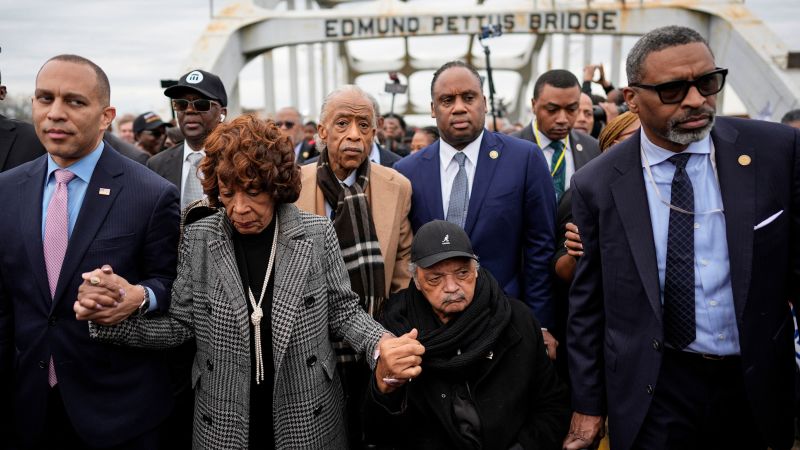
A pivotal chapter of American history is closing with Jesse Jackson’s death
Jesse Jackson’s life spanned a transformative era in U.S. history, marked by the struggle to dismantle systemic racism and expand opportunity for marginalized communities. Born in 1941, he grew up in a segregated society where Black individuals faced stark limitations in daily life—barriers that defined the Jim Crow South. Access to education, employment, and political participation were restricted, with only a fraction of eligible Black voters able to cast their ballots.
Early Life and Civil Rights Involvement
His formative years were shaped by the Black church, a cornerstone of community life during the civil rights movement. There, Jackson honed his leadership skills and developed a vision to uplift others. Guided by the moral resolve of seasoned activists, he became a prominent figure in the fight for justice, eventually serving as one of Dr. Martin Luther King Jr.’s youngest aides. The passing of Jackson signals the end of an era for those who spearheaded this movement, as their influence wanes.
Among the many remarkable aspects of Jackson’s journey, his early life stands out. Raised by a teenage mother in the South, he grew up in a world where racial inequality was the norm. Yet, he emerged with a determined spirit, dedicating himself to the cause of racial and economic equity. His organization, Operation PUSH, took on the mantle of civil rights leadership, pushing for tangible change in the economic structures that perpetuated discrimination.
Longevity and Resilience
Jackson’s enduring presence in public life defied expectations. While many of his contemporaries were cut short—King at 39, Evers at 37, Hampton at 21—he remained a steadfast advocate. His family endured relentless threats, yet he continued to challenge the status quo. Through decades of activism, he helped shift the focus from mere civil rights to a vision of inclusive economic opportunity.
His efforts catalyzed a movement that reshaped American politics. By championing the voices of ordinary Black Americans, he redefined the Democratic Party’s approach to power and representation. His 1984 and 1988 presidential campaigns, though unsuccessful, laid the groundwork for a new political era. “We must leave the racial battle ground and come to the economic common ground and moral higher ground,” he declared at the Democratic National Convention in 1984, articulating a path toward unity.
Legacy of Justice and Inclusion
Today, the accomplishments of Jackson and his peers are evident. Jim Crow barriers have been dismantled, and Black Americans now occupy positions of influence across industries and government. Yet, these gains were not inevitable. Without their tireless advocacy, the nation might still grapple with exclusion. Jackson’s work also underscored the interconnectedness of justice: the fight for equality extended beyond Black communities to benefit all Americans, including women and Asian Americans.
“We are members of the party and we don’t want to leave,” he told Democrats during his 1984 campaign. “But our self-respect is non-negotiable.”
His legacy endures in the ongoing pursuit of equity, reminding future generations that progress requires persistent effort. As the final chapter of his life closes, the impact of his journey remains a testament to the power of collective struggle and visionary leadership.
