Too many Zooms, too little face time. Is remote work making us lonely?

Too many Zooms, too little face time. Is remote work making us lonely?
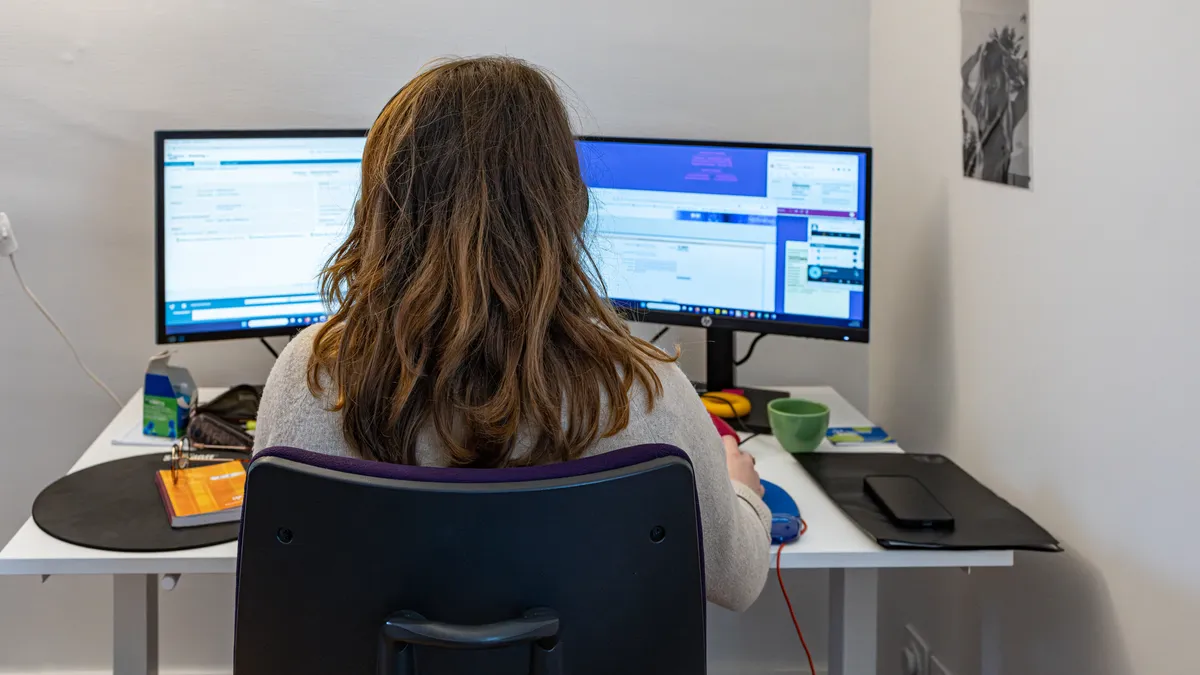
Cybersecarmor.com – For Alyse Lopez-Salm, a working mother in a small North Carolina town near the military base where her husband is employed, the shift to remote work has been a lifeline. With over 35 million Americans now working from home, Lopez-Salm’s routine reflects a growing trend: replacing the daily commute with a morning exercise class, managing childcare responsibilities with flexibility, and adjusting her work environment to accommodate health needs. Her home office, a carpeted space where she can move freely during flare-ups of rheumatoid arthritis, has become her sanctuary. “Your results are what matter, not you physically being in a building,” she explained, emphasizing how remote work aligns with her personal and professional priorities.
The Shift in Work Dynamics
The pandemic accelerated this transformation, fundamentally altering how people engage with their jobs. Offices once bustling with activity were emptied, and the traditional 9-to-5 grind gave way to a more decentralized approach. For many, this change has been positive, offering time savings, reduced stress, and the ability to balance work with family life. Parents now have the flexibility to attend pediatric appointments, while those juggling multiple caregiving roles can manage their time more effectively. The “sandwich generation” can care for aging parents without sacrificing their careers, and individuals with disabilities may find new opportunities to thrive in roles previously inaccessible.
Yet, the benefits come with a trade-off. As remote work becomes the norm, so too does a sense of isolation. A recent study from the Federal Reserve Bank of New York, the University of Virginia, and Harvard University, published in Science, warns that this trend could be exacerbating loneliness and mental health challenges. The research, which analyzed data from over 588,000 workers, found that nearly 90% of those in “remote capable” jobs spend their entire workday alone. This lack of social interaction, combined with less in-person socializing after hours, has led to a measurable rise in distress, mental health consultations, and antidepressant prescriptions.
The Cost of Connection
Emma Harrington, one of the study’s co-authors, highlighted the growing concern. “Everyone sees an increase in the number of hours they spend alone, largely driven by their workday,” she said. “For people living alone, that’s more likely to translate into a day with no social contact and never leaving the house.” The study estimates that remote work accounts for a third of the rise in mental distress between 2011 and 2024, particularly among individuals without a regular social network. This has sparked debate about whether the convenience of working from home is eroding the human connections that sustain well-being.
While the study raises alarms, some researchers argue that the evidence is mixed. Nick Bloom, a Stanford economist, conducted randomized trials showing that remote work can improve mental health. “When people can work from home, they reduce commuting stress, control their time better, and spend more time with friends and family,” he said. However, he acknowledged that not everyone benefits equally. “Remote work affects different people in different ways,” Bloom noted. “Some crave company and prefer the office, while others thrive in fully remote settings.”
Contrasting Perspectives
Newton Cheng, who spent 17 years overseeing health and performance programs at Google, offers a nuanced view. “The evidence clearly shows that hybrid and remote work helps people’s health and well-being,” he stated. “But for me personally, remote work feels isolating.” Cheng’s experience underscores a key point: the same setup that empowers one individual may challenge another. After leaving his corporate role in September, he felt the absence of office chatter and spontaneous interactions acutely. “If you leave me to my own devices, I could sit in an office for days without seeing anyone,” he said, illustrating the personal toll of solitary work.
The study’s findings have ignited a lively debate among academics. Critics point to a wealth of existing research suggesting remote and hybrid work can boost productivity and employee satisfaction. Yet, the New York study adds a new layer to the conversation, emphasizing that isolation isn’t just a byproduct—it’s a growing epidemic. “The way we work is contributing to a sense of loneliness,” Harrington said, noting that remote workers often lack the casual exchanges and mentorship opportunities that define in-person collaboration. These interactions, she argues, are vital for emotional support and professional growth, especially for younger employees.
Choices and Flexibility
Bloom believes the solution lies in personal choice. “The best way to improve mental health is to let employees decide what works best for them,” he said. “If someone finds remote work problematic, they can always return to the office or change jobs.” This flexibility, he argues, ensures that people can tailor their work arrangements to their unique needs. “I don’t see how something that employees love and repeatedly choose can be bad for them,” he added.
Despite the divide in opinions, one truth remains: remote work is reshaping the American workplace. For some, it’s a pathway to greater autonomy and well-being. For others, it’s a source of quiet despair. As the debate continues, the challenge lies in finding a balance that preserves productivity while safeguarding human connection. Lopez-Salm, for instance, sees her home office as a haven. But she also acknowledges the importance of occasional in-person meetings. “I’ve learned to make time for social interactions, even if it’s just a quick call with a colleague,” she said. “Without that, the isolation starts to take a toll.”
The New York study’s authors stress that the problem isn’t remote work itself, but its impact on social dynamics. “The key is to recognize how the structure of remote work influences daily interactions,” Harrington said. “When we remove the physical presence of coworkers, we change the rhythm of work and life.” This shift, she argues, demands intentional effort to maintain relationships. For others, like Cheng, the solution might be a hybrid model that blends the best of both worlds. “I think the answer is in the middle,” he said. “Having some days in the office and some at home allows for flexibility without sacrificing the human element.”
As remote work continues to evolve, the question of its psychological impact will remain central. While the data reveals a complex picture—highlighting both gains and losses—the consensus is that the future of work must account for individual differences. Whether through policy changes, workplace design, or personal choices, the goal is to ensure that remote work doesn’t come at the cost of connection. “We can’t ignore the loneliness epidemic,” Harrington said. “But we also can’t let it define the way we work.” The challenge, she added, is to create environments where productivity and well-being coexist without compromising the human experience.
In the end, the debate over remote work’s role in loneliness is about more than just desk chairs and Wi-Fi signals. It’s about how we structure our days, who we interact with, and how we define success in a world where the office is no longer a fixed location. As the workforce adapts to this new reality, the answer may lie in embracing both the advantages and the challenges of working from home. For now, the evidence suggests that while the trend is clear, the impact remains deeply personal.