Iran plays pivotal World Cup match hours after country bombed by U.S.

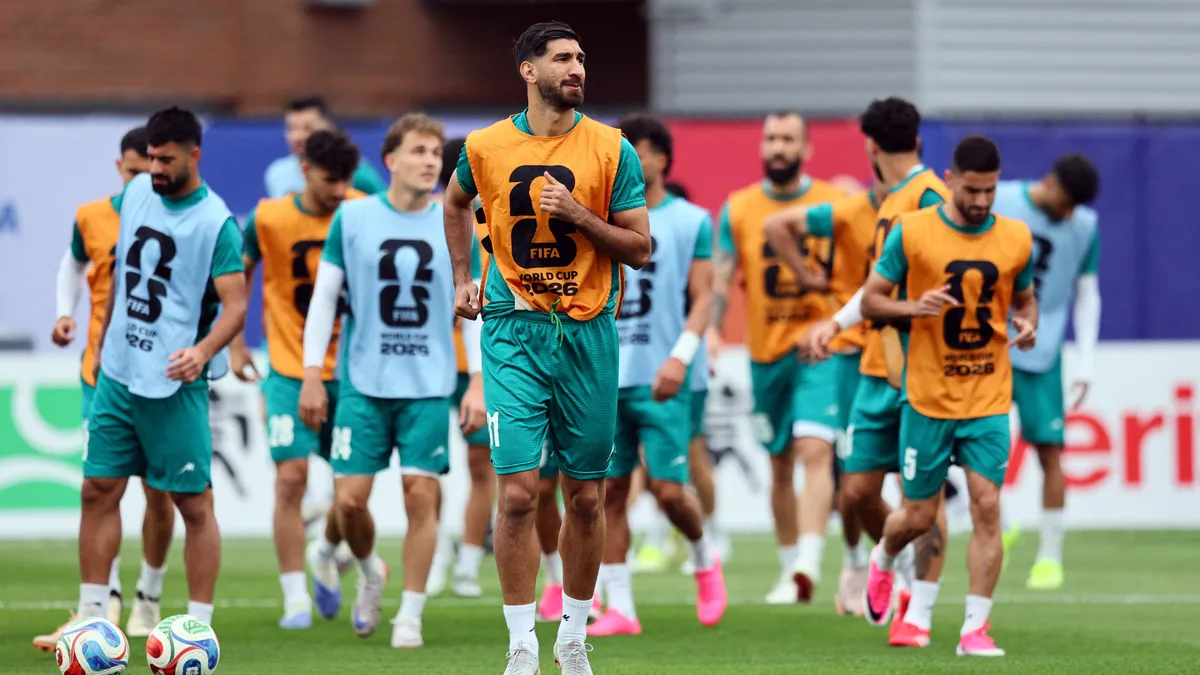
Iran’s World Cup Clash Amid Escalating Tensions
Cybersecarmor.com – SEATTLE — The Iran national soccer team’s pivotal World Cup match against Egypt, set to decide their fate in the group stage, unfolded in a charged atmosphere as the country faced U.S. aerial attacks. The strikes, launched hours before the game, targeted missile and drone storage facilities, as well as coastal radar systems, sparking renewed debates about the geopolitical backdrop of the sporting event.
A Political Backdrop for the Pride Game
The U.S. actions were a response to Iran’s earlier attack on a commercial vessel in the Strait of Hormuz, which had drawn international condemnation. Despite the conflict, the World Cup match between Iran and Egypt in Seattle carried symbolic weight, designated as the Pride Game by local organizers. This decision was made long before the teams were confirmed, with the city’s Pride celebrations serving as a backdrop for the encounter. However, the timing of the strikes added layers of complexity to the game’s significance, as both nations braced for heightened tensions.
Iran’s team, Team Melli, had already navigated political challenges before arriving in the U.S. for the tournament. Just days prior, they were forced to relocate their base camp from Tucson, Arizona, to Tijuana, Mexico, due to the U.S. government’s refusal to grant them extended stays. This abrupt move underscored the broader diplomatic friction, as the team’s presence in the country became a point of contention. The Department of Homeland Security further complicated matters by denying visas to several members of Iran’s delegation, including its soccer federation president, more than 24 hours before their first matches.
Emotional Symbols and Social Media Statements
As the Iran-Egypt showdown approached, the team’s players and coaches subtly channeled their frustrations into the game. They wore “168” pins, a nod to the U.S. missile strike on a school in Minab that killed 168 people, most of them children. The incident, which occurred early in the conflict, was referenced in social media posts that depicted the players carrying backpacks, symbolizing the burden of those who lost their lives. These gestures, though quiet, reflected a deeper sense of solidarity and grievance.
Iran’s official team account on Instagram amplified the emotional resonance of the event. The posts featured a slide titled “The Team That Never Grew Up,” which highlighted the ages of children killed in the strike and their names, paired with the hashtag #168. This visual storytelling aimed to humanize the conflict and remind the world of its human toll, even as the teams focused on their athletic objectives. The Pride Game, meant to celebrate diversity and unity, now carried an undercurrent of political strife, with the players’ actions and expressions subtly echoing their nation’s stance.
Historical Context and Strategic Shifts
The relocation of Iran’s team to Tijuana, Mexico, was not an isolated decision. It followed a pattern of logistical adjustments that began when the U.S. government imposed restrictions on their stay. The team’s first two matches in Los Angeles had already been impacted by these measures, with players forced to leave immediately after their games. However, the move to Seattle allowed for a brief reprieve, granting them two days to prepare for the Egypt encounter. This logistical shift also allowed the team to express their frustration through symbolic gestures, such as the “168” pins, which became a silent protest against the U.S. actions.
The Iran-Egypt match, set for June 26, was more than a game—it was a critical test for the team’s chances of advancing to the knockout rounds. With only one win in the group stage, a victory against Egypt would secure their place in the next phase of the tournament. Yet, the political backdrop raised questions about how the players would channel their emotions during the match. Despite their efforts to avoid public discourse, the team’s references to the Minab strike suggested that the conflict was far from a distant memory.
A Midfielder’s Reflection
“We don’t ask for much. We just ask for the same procedure for all the other 47 teams,” said Alireza Jahanbakhsh, Iran’s midfielder, after the team drew 1-1 with Belgium on June 21. His words highlighted the frustration of players who felt their nation’s efforts to participate in the World Cup were being unfairly scrutinized. While the team focused on their performance, the strikes on Iran served as a reminder of the broader geopolitical tensions that had shaped their journey to the tournament.
The strikes on Iran, while targeted at military infrastructure, also struck a personal chord for the players. The U.S. military’s internal investigation had initially pointed to its forces as responsible for the Minab strike, a fact that President Donald Trump emphasized earlier in the week. “It may never be known who was at fault in the strike,” Trump stated, “but the U.S. has shown its forces were likely responsible.” This admission, though preliminary, underscored the controversy surrounding the attacks and their impact on Iran’s morale.
As the World Cup progressed, the Iran-Egypt match became a focal point for both nations. The game was not only a test of skill but also a reflection of the ongoing conflict that had forced the team into an unusual situation. The Pride Game’s symbolism, combined with the political pressure, created an environment where every goal and moment on the field carried added weight. For Iran, the stakes were high, as the outcome could determine their path to the knockout rounds and their ability to showcase resilience amid adversity.
The event in Seattle also highlighted the international community’s role in shaping the narrative of the World Cup. Organizers had chosen to align the Pride Game with the city’s celebrations, aiming to foster inclusivity and unity. However, the timing of the U.S. strikes transformed the match into a platform for political expression. As the players prepared to take the field, the echoes of the conflict lingered, reminding everyone that sports and politics often intersect in unexpected ways.
For Iran’s team, the challenge was to balance their sporting ambitions with the emotional weight of their situation. The “168” pins, the social media references, and the personal stories of the children killed in the strike all served as reminders of their nation’s struggles. Yet, as the game began, they carried these emotions into the match, determined to make their presence felt on the world stage. The outcome of their clash with Egypt would not only define their World Cup prospects but also serve as a testament to their ability to endure and compete despite the backdrop of geopolitical conflict.