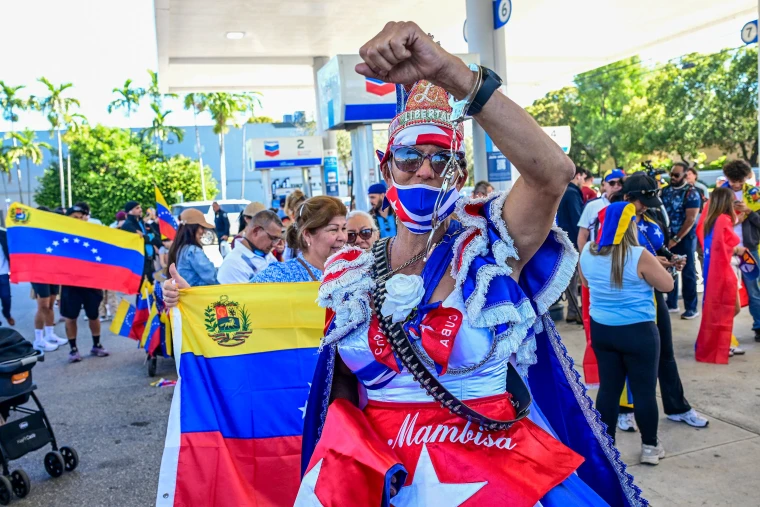
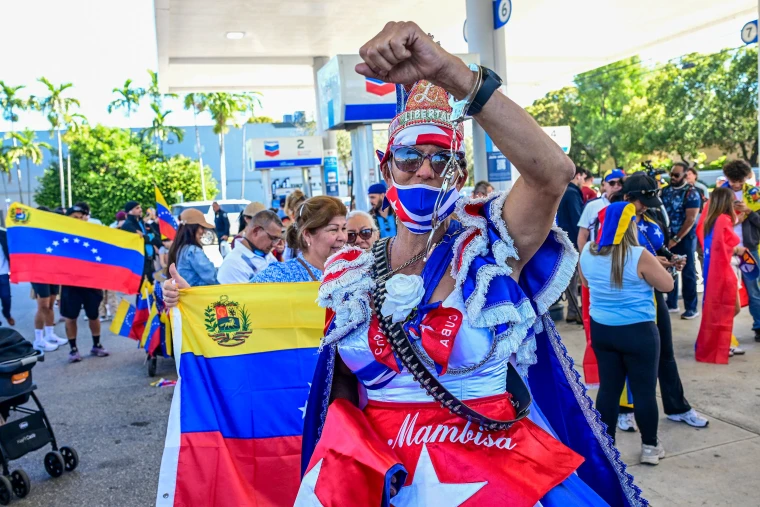
DORAL, Fla. — They came out in the middle of the night when they heard the news, some still in pajamas as they joined the crowd of revelers waving Venezuelan flags and dancing, singing and crying. “Thank you, Lord, thank you president of the United States. I’ve been waiting for years — he’s done so much damage. This has been horrible,” said Yajaira, a Venezuelan American from the city of Maracaibo. The news that the U.S. had attacked Venezuela and captured President Nicolás Maduro and his wife elicited a spontaneous celebration in front of El Arepazo, a restaurant in Doral, a city in Miami-Dade County nicknamed “Doralzuela” because it has the highest concentration of Venezuelans in the U.S. “We’ve been here eight years, eight years already,” Yajaira said, referring to how long she’s been in the U.S. “They killed my older brother. It was so tough. They kidnapped my brothers. That was tough. I thank God for all of this because it’s been tough,” she said, her voice breaking as she looked up at the sky. Throughout the morning, the growing crowds in Doral were chanting in Spanish, “The government is over, the government has fallen,” amid the blasting car horns and music. Venezuelans started coming to Florida and the U.S. in large numbers in the early 2000s after socialist Hugo Chávez rose to power. The situation deteriorated drastically when Maduro took over in 2013. Under Maduro, the country’s oil-driven economy has faced a decadelong collapse and an estimated 80% of residents live in poverty. Around 8 million Venezuelans have fled under his rule. President Donald Trump said the U.S. is “going to run” Venezuela following Maduro’s capture “until such time as a safe, proper and judicious transition can take place.” He said Venezuelan Vice President Delcy Rodriguez has been sworn is as president; she has called for Maduro’s release. Diana Monert, also celebrating in Doral, was asked what the recent events mean for Venezuelans. “Freedom,” she said. The relief and jubilation stretched across other parts of the country. In Cincinnati, Rossaly Nava, 43, a property manager, said, “My heart is racing — this is the biggest miracle that has happened in my lifetime. I have spent so many hours awake and I really want to contribute to recovering my country.” Amid the relief among some Venezuelan Americans that Maduro was no longer in power, there were questions and concerns about what happens next, with several noting that other top officials in Venezuela had not been captured. A young man celebrating in front of El Arepazo who did not want to give his name because he was worried about his family in Venezuela said it was “the biggest day we were waiting for. I’m really happy. We were waiting for the end of that dictatorship.” When asked how his family in Venezuela was doing, he said, “They’re excited but at the same time they have fear, they’re waiting for what’s going to happen — what’s going to be the next step.” Patricia Andrade, who helps newly arrived migrants through her Miami nonprofit Raices Venezolanas, said she has mixed feelings. “I spent years waiting for the Chavez-Maduro regime to fall,” she said. While it has given her great happiness to see Maduro in U.S. custody, there are still many more Venezuelan officials to be arrested, she said. Adelys Ferro, executive director of the Venezuelan American Caucus, a grassroots group working to amplify Venezuelan American voices and issues in the U.S., said she was celebrating that “justice is taking its course and that Maduro responds for all the crimes he’s committed.” But she warned that “Venezuela is still not free from Chavismo,” referring to the government’s socialist rule started by Chávez. “I hope that the innocents, the good people in Venezuela, who are the majority, will be protected,” she said. Ferro added that she hopes “Trump understands Venezuelans here in the U.S. also fled and need protection. It’s no time for more attacks and persecution of Venezuelan immigrants. Those people fled a dictatorship and they’re not Tren de Aragua.” Ferro noted more than 6 in 10 Venezuelans in the U.S. came through temporary protected status, which the Trump administration has rescinded. She also urged Trump to recognize that there’s a need for bipartisan support for Venezuelans. “What we need is support in this critical moment,” she said. In Venezuela, a resident who didn’t want to be named for their own safety said, “We had different tips that something was coming, Trump had already announced something,” adding the events reminded them of the late writer Gabriel García Márquez’s novel “Chronicle of a Death Foretold.” Speaking hours after the attack, the Venezuelan resident said “nobody is in support of the invasion, the violence, but we aren’t also in support of the people who didn’t win the election,” referring to Maduro, who remained in power despite credible evidence that his opponent won the 2024 election. “We are humble citizens — we’re caught. How is it possible that they took they took the president and his wife? Was it someone who betrayed him? There is so much uncertainty and so much fear,” the resident said. “I’m very impressed that they just took him.” Yanire Lucas, a Caracas resident, told The Associated Press she was scared to even leave the house. “What is happening is unprecedented,” Lucas said. “We’re still on edge, and now we’re uncertain about what to do. Stay safe at home, go out to look for food? I don’t know.” Trump’s statement that the U.S. would “run” Venezuela is opening up a host of questions over what will happen in the next few days and months. But in Doral, before the president’s statements, Yajaira was asked what message she had for other Venezuelans following the U.S. attack and Maduro’s capture. “Be strong, sí se puede [yes we can]” Yajaira said. “We’re going to be a free, prosperous country.” Sandra Lilley is a senior editor at NBCNews.com. George Solis is a national correspondent with
Tears, relief and questions about what comes next: Venezuelans in U.S. celebrate Maduro capture
DORAL, Fla. — They came out in the middle of the night when they heard the news, some still in pajamas as they joined the crowd of revelers waving Venezuelan flags and dancing, singing and crying. “Thank you, Lord, thank you president of the United States. I’ve been waiting for years — he’s done so much damage. This has been horrible,” said Yajaira, a Venezuelan American from the city of Maracaibo. The news that the U.S. had attacked Venezuela and captured President Nicolás Maduro and his wife elicited a spontaneous celebration in front of El Arepazo, a restaurant in Doral, a city in Miami-Dade County nicknamed “Doralzuela” because it has the highest concentration of Venezuelans in the U.S. “We’ve been here eight years, eight years already,” Yajaira said, referring to how long she’s been in the U.S. “They killed my older brother. It was so tough. They kidnapped my brothers. That was tough. I thank God for all of this because it’s been tough,” she said, her voice breaking as she looked up at the sky. Throughout the morning, the growing crowds in Doral were chanting in Spanish, “The government is over, the government has fallen,” amid the blasting car horns and music. Venezuelans started coming to Florida and the U.S. in large numbers in the early 2000s after socialist Hugo Chávez rose to power. The situation deteriorated drastically when Maduro took over in 2013. Under Maduro, the country’s oil-driven economy has faced a decadelong collapse and an estimated 80% of residents live in poverty. Around 8 million Venezuelans have fled under his rule. President Donald Trump said the U.S. is “going to run” Venezuela following Maduro’s capture “until such time as a safe, proper and judicious transition can take place.” He said Venezuelan Vice President Delcy Rodriguez has been sworn is as president; she has called for Maduro’s release. Diana Monert, also celebrating in Doral, was asked what the recent events mean for Venezuelans. “Freedom,” she said. The relief and jubilation stretched across other parts of the country. In Cincinnati, Rossaly Nava, 43, a property manager, said, “My heart is racing — this is the biggest miracle that has happened in my lifetime. I have spent so many hours awake and I really want to contribute to recovering my country.” Amid the relief among some Venezuelan Americans that Maduro was no longer in power, there were questions and concerns about what happens next, with several noting that other top officials in Venezuela had not been captured. A young man celebrating in front of El Arepazo who did not want to give his name because he was worried about his family in Venezuela said it was “the biggest day we were waiting for. I’m really happy. We were waiting for the end of that dictatorship.” When asked how his family in Venezuela was doing, he said, “They’re excited but at the same time they have fear, they’re waiting for what’s going to happen — what’s going to be the next step.” Patricia Andrade, who helps newly arrived migrants through her Miami nonprofit Raices Venezolanas, said she has mixed feelings. “I spent years waiting for the Chavez-Maduro regime to fall,” she said. While it has given her great happiness to see Maduro in U.S. custody, there are still many more Venezuelan officials to be arrested, she said. Adelys Ferro, executive director of the Venezuelan American Caucus, a grassroots group working to amplify Venezuelan American voices and issues in the U.S., said she was celebrating that “justice is taking its course and that Maduro responds for all the crimes he’s committed.” But she warned that “Venezuela is still not free from Chavismo,” referring to the government’s socialist rule started by Chávez. “I hope that the innocents, the good people in Venezuela, who are the majority, will be protected,” she said. Ferro added that she hopes “Trump understands Venezuelans here in the U.S. also fled and need protection. It’s no time for more attacks and persecution of Venezuelan immigrants. Those people fled a dictatorship and they’re not Tren de Aragua.” Ferro noted more than 6 in 10 Venezuelans in the U.S. came through temporary protected status, which the Trump administration has rescinded. She also urged Trump to recognize that there’s a need for bipartisan support for Venezuelans. “What we need is support in this critical moment,” she said. In Venezuela, a resident who didn’t want to be named for their own safety said, “We had different tips that something was coming, Trump had already announced something,” adding the events reminded them of the late writer Gabriel García Márquez’s novel “Chronicle of a Death Foretold.” Speaking hours after the attack, the Venezuelan resident said “nobody is in support of the invasion, the violence, but we aren’t also in support of the people who didn’t win the election,” referring to Maduro, who remained in power despite credible evidence that his opponent won the 2024 election. “We are humble citizens — we’re caught. How is it possible that they took they took the president and his wife? Was it someone who betrayed him? There is so much uncertainty and so much fear,” the resident said. “I’m very impressed that they just took him.” Yanire Lucas, a Caracas resident, told The Associated Press she was scared to even leave the house. “What is happening is unprecedented,” Lucas said. “We’re still on edge, and now we’re uncertain about what to do. Stay safe at home, go out to look for food? I don’t know.” Trump’s statement that the U.S. would “run” Venezuela is opening up a host of questions over what will happen in the next few days and months. But in Doral, before the president’s statements, Yajaira was asked what message she had for other Venezuelans following the U.S. attack and Maduro’s capture. “Be strong, sí se puede [yes we can]” Yajaira said. “We’re going to be a free, prosperous country.” Sandra Lilley is a senior editor at NBCNews.com. George Solis is a national correspondent with