
‘Reckless escalation’: Europe condemns Russia’s use of ‘Oreshnik’ missile
Reckless escalation’: Europe condemns Russia’s use of ‘Oreshnik’ missile
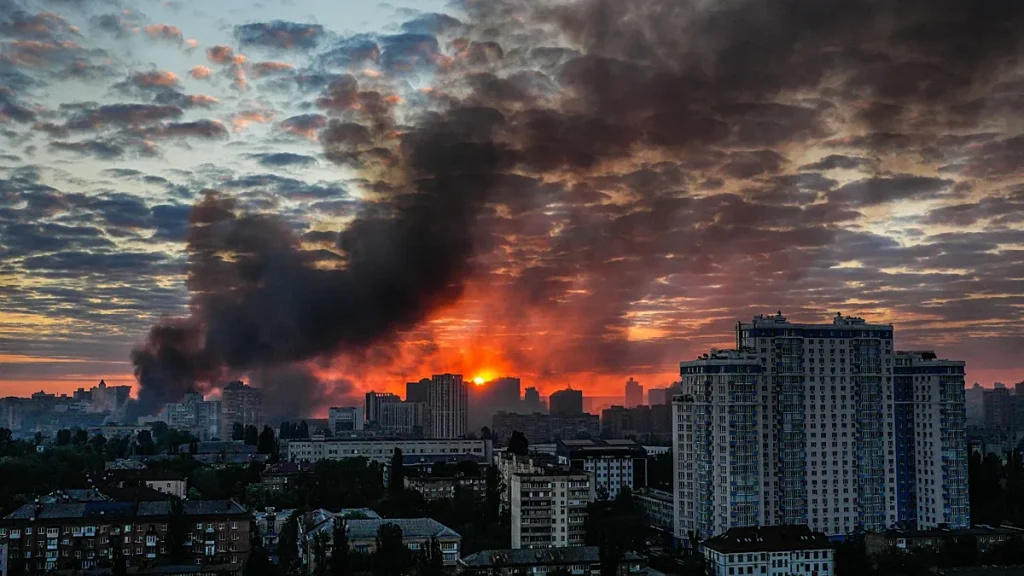
Reckless escalation – On Sunday, Ukrainian President Volodymyr Zelenskyy revealed that Russia had once again employed its “Oreshnik” intermediate-range ballistic missile, this time targeting areas near Kyiv. The Russian Defence Ministry swiftly validated the claim, stating the launch was part of a retaliatory operation in response to Ukrainian strikes on “civilian targets,” which Kyiv has categorically denied. This latest deployment of the Oreshnik missile has drawn sharp criticism from European leaders, who view it as a significant intensification of the ongoing conflict.
European Responses to the Missile Attack
German Chancellor Friedrich Merz expressed his dismay over the attack on X, labeling it a “reckless escalation” of the war. His remarks underscored Germany’s unwavering commitment to backing Ukraine. Similarly, French President Emmanuel Macron denounced the recent Russian strikes, emphasizing that civilian areas in Ukraine had been targeted once more. He framed the use of the nuclear-capable Oreshnik missile as a testament to Russia’s stalled war effort and its growing willingness to take risks in escalating the conflict.
“The reported use of the Oreshnik missile is a sign of both the deadlock in Russia’s war effort and a dangerous escalation of the conflict,” Macron said.
European Commission President Ursula von der Leyen highlighted the “Kremlin’s brutality and disregard for both human life and peace negotiations” in her statement. She characterized the attacks as acts of terror, arguing that they reflect a shift from strategic military action to a state of desperation. Von der Leyen reiterated the EU’s ongoing support for Ukraine, particularly in enhancing its air defence capabilities to counter such threats.
EU foreign policy chief Kaja Kallas described the strikes as “abhorrent acts of terror” against the Ukrainian civilian population. She pointed to the deliberate targeting of city centres, suggesting that Russia had reached a military dead end and was now resorting to symbolic attacks to regain momentum. Kallas also called the Oreshnik missile’s deployment “reckless nuclear brinkmanship,” highlighting its potential to escalate the conflict to a more perilous level.
Background on the Oreshnik Missile
The Oreshnik missile, first introduced in 2024, has become a focal point of international concern since its initial use during an attack on the Ukrainian city of Dnipro. According to Russian military officials, the missile is described as a “state-of-the-art” system, capable of striking targets up to 5,500 kilometres away. This range places large portions of Europe within reach, raising alarms about its strategic implications.
Belarus is also suspected of possessing the Oreshnik missile system, further complicating the regional security landscape. The deployment of the missile during a large-scale Russian offensive overnight into Sunday marked a critical moment in the war. Ukrainian Air Force reports indicated that Moscow launched 90 missiles and cruise missiles, along with approximately 600 drones, as part of the assault.
Impact of the Attack on Kyiv
Among the targets struck in the assault was the ARD television studio in Kyiv, which suffered severe damage. The Ukrainian Air Force reported that the studio was heavily damaged and partially destroyed during the attack. A powerful blast wave, likely caused by the missile strike, shattered windows and caused extensive damage to the facility. Notably, no casualties were reported, as no employees were present in the building at the time of the incident.
The Oreshnik missile’s ability to target urban areas has sparked fears of a broader escalation. European leaders are now looking to coordinate further measures against Russia, with EU foreign ministers expected to convene next week to discuss intensified pressure on the Kremlin. This includes evaluating additional sanctions and military aid to Ukraine, which remains a priority for many nations in the bloc.
Strategic Implications and Future Outlook
The use of the Oreshnik missile represents a turning point in the war, as it signals Russia’s readiness to employ nuclear-capable weapons in a conventional conflict. Analysts suggest that the missile’s deployment is part of a calculated strategy to demonstrate military capability and destabilize negotiations. Despite the attacks, Ukraine has maintained its resilience, with Zelenskyy continuing to advocate for international support and a peaceful resolution.
European leaders are united in their condemnation, though their approaches differ. While Merz focuses on the immediate escalation, Macron ties the incident to the broader context of Russia’s military challenges. Von der Leyen and Kallas emphasize the humanitarian impact and the need for sustained support. The collective response highlights the EU’s determination to uphold Ukraine’s sovereignty and protect its civilian population from further harm.
As the conflict continues, the Oreshnik missile serves as a reminder of the evolving nature of warfare and the potential for rapid escalation. Its presence in the Kyiv region underscores the vulnerability of urban centres and the need for robust defences. With the upcoming meetings of EU foreign ministers, the bloc is poised to take decisive action, ensuring that Russia faces consequences for its aggressive tactics.
Amid the growing tensions, the incident has also raised questions about the role of neighboring states in the conflict. Belarus’s potential possession of the missile system adds a layer of complexity, as it could enable further attacks on Ukrainian territory. This development has prompted calls for closer cooperation among European nations to monitor and respond to any additional threats.
The ongoing deployment of the Oreshnik missile highlights the urgency of the situation. While the attacks have caused significant damage, they have not yet resulted in direct casualties, which may be seen as a tactical advantage for Russia. However, the European Union remains steadfast in its support, emphasizing the importance of maintaining pressure on Moscow to achieve a just and lasting peace.

