
Found on walk: 1.5 tonnes of Soviet ammunition discovered in Berlin forest
Found on Walk: 1.5 Tonnes of Soviet Ammunition Unearthed in Berlin Forest
A Mysterious Object Sparks Investigation in Pankow
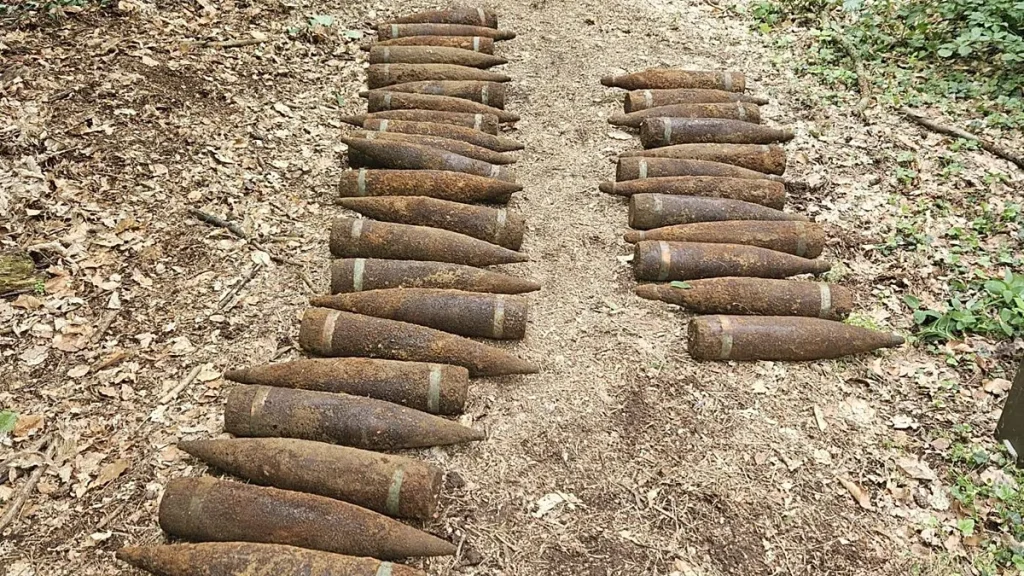
Found on walk – During a routine stroll through the wooded expanses of Berlin’s Pankow district, a passerby stumbled upon a peculiar object that quickly escalated into a full-scale investigation. The discovery, made on May 23, 2026, prompted immediate action from the State Office of Criminal Investigation (LKA), as specialists arrived to assess the scene. What began as a casual walk turned into an unexpected encounter with a relic of the Second World War, hidden beneath the forest floor for decades.
Upon closer inspection, the specialists found that the object was not an ordinary item but a cache of 59 unfired shells, each crafted with the distinctive design of Soviet weaponry. These shells, measuring 122 millimeters in caliber, were buried in the earth, their presence a silent testament to the war’s enduring impact on the region. The total weight of the discovery amounted to approximately 1.5 tonnes, a figure that underscored the scale of the hidden arsenal.
The police, quick to respond, treated the find with a blend of seriousness and levity. Their Facebook post, shared by the official account @polizeiberlin, humorously remarked on the situation: “There turned out to be a bit more than just timber lying around in Pankow’s woods…” The statement highlighted the surprise of the discovery, as the shells had remained undisturbed and unnoticed for years.
A Historic Relic Unearthed
The find reignited discussions about the historical significance of Soviet military equipment in post-war Berlin. During the Cold War, the city served as a strategic buffer zone between East and West, and its forests were often used to conceal munitions. The 122mm shells, a type commonly employed in heavy artillery, were likely stored as part of the Soviet Union’s wartime stockpiles, remnants of the conflict that reshaped Europe in the 1940s.
While the discovery was unexpected, the police emphasized that it did not pose an immediate threat to public safety. The shells were intact and not loaded, meaning there was no risk of accidental detonation. However, the process of retrieving them required careful coordination. Specialist teams worked methodically to secure each shell, ensuring that the operation was both efficient and safe. The complexity of the task was evident, as even a single shell needed to be handled with precision to avoid any mishaps.
Historians and military experts noted that such caches were not uncommon in the region. After World War II, the Soviet Union left behind vast quantities of ordnance across Eastern Europe, often hidden in remote areas to prevent their discovery by Allied forces. Over time, these munitions became part of the landscape, their presence only revealed by chance or through deliberate excavation. The 1.5-tonne cache in Pankow added to this legacy, offering a glimpse into the past and the remnants of a bygone era.
The Aftermath of the Discovery
Following the retrieval, the ammunition was transported to a secure location for disposal. The process involved careful documentation and analysis to determine the shells’ origin and condition. While the police confirmed that the find was not a cause for alarm, it underscored the importance of vigilance in areas that were once battlegrounds. The incident also served as a reminder of the ongoing presence of wartime relics in modern cities, where history and the present often intersect in surprising ways.
The community’s reaction to the discovery was mixed. Some residents expressed curiosity about the historical value of the find, while others were initially concerned about potential dangers. However, the police swiftly addressed these worries, reassuring the public that no immediate threats were present. The operation was praised for its thoroughness, with specialists taking time to inspect the site and ensure that all shells were accounted for before their removal.
As the shells were taken away, a sense of nostalgia lingered among those who witnessed the event. The forest, once a quiet retreat, now carried the weight of a wartime secret. The discovery also sparked conversations about the need for continued archaeological efforts in Berlin, where hidden treasures of the past might still be waiting to be uncovered. With each new find, the city’s rich and complex history is brought to light, offering a tangible connection to the events that shaped it.
A Reminder of the Past
The 1.5-tonne cache of Soviet ammunition in Pankow serves as a poignant reminder of the war’s lasting influence. Though the conflict ended over eight decades ago, its echoes remain in the form of artifacts and relics that still surface in unexpected places. The discovery not only highlighted the ingenuity of wartime storage but also demonstrated the role of everyday citizens in uncovering historical truths.
Experts suggest that such finds are part of a broader trend in the region, where the remnants of past conflicts are gradually being unearthed as urban development and natural erosion take their toll on the landscape. The shells found in Berlin’s forest, for instance, may have been left behind during the final stages of the war or stored as part of a post-war military strategy. Their presence in a once-peaceful setting added a layer of intrigue, prompting questions about their purpose and the circumstances of their concealment.
The police’s approach to the situation reflected a balance between professionalism and public engagement. By sharing the event on social media, they not only provided updates but also encouraged citizens to remain alert for unusual items in their surroundings. This incident also showcased the importance of collaboration between law enforcement and historical preservation efforts, ensuring that both safety and cultural heritage are safeguarded.
As the ammunition was processed and disposed of, the forest was left with a sense of mystery. The discovery, while not dangerous, was a significant event in the city’s history. It reminded people of the resilience of the land and the hidden stories that lie beneath its surface. In a city that has long been a symbol of division and unity, the find added another chapter to its narrative, one that bridges the past and the present with a touch of irony.
Overall, the incident in Pankow exemplifies how history can resurface in the most unassuming moments. The accidental discovery of a wartime cache not only entertained the public but also provided valuable insights into the Soviet military’s presence in Germany. As the forest continues to be a place of natural beauty, it also remains a repository of historical artifacts, waiting for the right moment to be revealed.

