
Cannes 2026: Cristian Mungiu’s political drama ‘Fjord’ wins the Palme d’Or
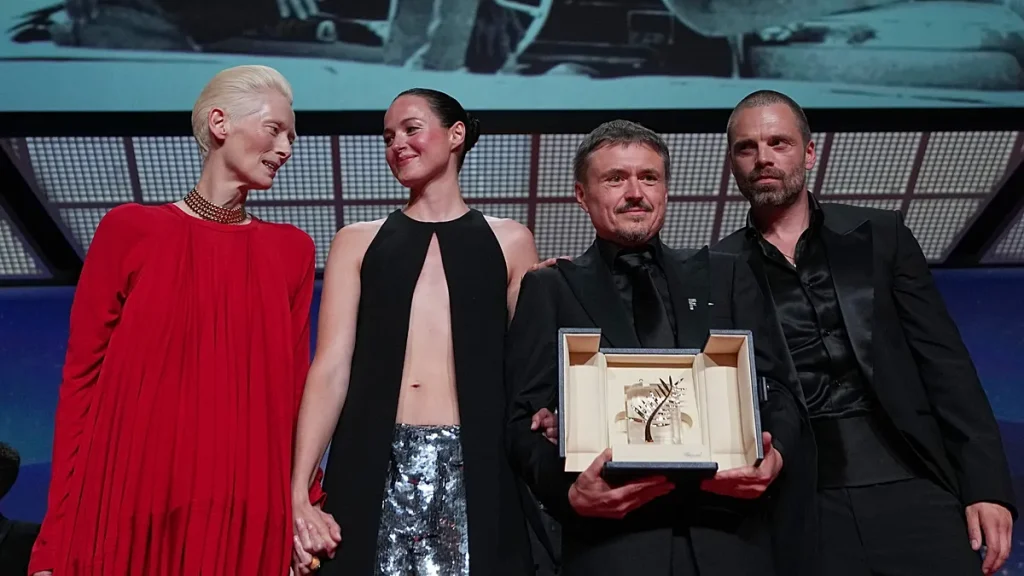
Cannes 2026: Cristian Mungiu’s Political Drama ‘Fjord’ Claims the Palme d’Or
Cannes 2026 – The 79th Cannes Film Festival concluded its annual celebration on Saturday with the announcement of its top honors, drawing attention to the evolving narratives of global cinema. As the world’s most anticipated event brought together seasoned directors and emerging talents, the festival once again highlighted the power of storytelling to mirror societal tensions. This year’s awards ceremony, held against the backdrop of the French Riviera, underscored a shift toward politically charged narratives and intimate explorations of human conflict.
Auteur Triumph in ‘Fjord’
Cristian Mungiu’s Fjord emerged as the standout entry, securing the coveted Palme d’Or. The film, which follows the Gheorghiu family, offers a poignant examination of the clash between progressive ideals and deeply ingrained traditions. The family, fervent Romanian evangelicals, relocate to a remote Norwegian fjord, where their faith shapes every aspect of their lives. Mihai, the patriarch, portrayed by Sebastian Stan, reprises his role as a former Donald Trump character in The Apprentice (2024) but now embodies a different kind of authority—within a small community that is both welcoming and judgmental.
The narrative unfolds as Mihai, a Romanian aeronautical engineer, reconnects with his wife Lisbet’s extended family after returning to Norway. Their children are raised with rigid discipline, reflecting the couple’s commitment to their religious convictions. Initially, the community accepts them, but this harmony shatters when a teacher discovers unexplained bruises on one of the daughters. The incident sparks a deeper inquiry into the family’s values, revealing the fractures within their seemingly united world. Mungiu’s film, rooted in real-life events, serves as a microcosm of broader ideological divides, challenging audiences to confront the complexities of faith and modernity.
Grand Prize Goes to Andrey Zvyagintsev’s ‘Minotaur’
Andrey Zvyagintsev’s Minotaur claimed the Grand Prize, continuing the tradition of recognizing bold, politically resonant storytelling. The Russian director’s work, which has long been associated with sharp critiques of authoritarianism, once again proved its relevance. In his acceptance speech, Zvyagintsev directed his message toward Russian President Vladimir Putin, urging him to “stop the carnage” in the context of the ongoing Ukrainian conflict. “There is someone else I would like to address personally today, in my own name,” he said, speaking in Russian. “He is not using a VPN to follow this ceremony live, but I am certain that he has other, much more important decisions to make at the moment.”
“Millions of people on both sides of the contact line dream of only one thing: that the massacres finally stop. And the only person who can put an end to this slaughter is the President of the Russian Federation putting an end to this carnage. The whole world is waiting for that.”
Zvyagintsev’s speech reflected the festival’s growing role as a platform for geopolitical discourse, blending art with activism. His film, Minotaur, weaves a tale of political intrigue and personal struggle, echoing the tensions that have shaped contemporary cinema.
Best Director Awards Recognize Dual Winners
The Best Director Award was shared by two filmmakers: Javier Ambrossi and Javier Calvo for La Bola Negra, and Pawel Pawlikowski for Fatherland. This decision followed the tradition of L’Agent secret by Kleber Mendonça Filho in 2025, emphasizing the festival’s commitment to diverse voices. Pawlikowski’s acceptance speech underscored the importance of artistic freedom in the face of political pressure. “Cinema must reflect the political situation, but not according to dictated conditions,” he stated. “It takes courage in this world to talk about what people really see. There must be a space of freedom for art.”
Pawlikowski’s remarks came in the wake of the anti-Bolloré platform controversy, which had cast a shadow over the festival’s proceedings. His film, Fatherland, resonated with audiences as a testament to resilience in a time of uncertainty. Ambrossi and Calvo, on the other hand, celebrated their work La Bola Negra as a narrative that balances humor with social commentary, offering a fresh perspective on the role of directors in shaping cinematic conversations.
Themes of the 2026 Festival
The 2026 Cannes Film Festival was marked by a clear focus on auteur-driven and independent cinema, with many entries prioritizing personal expression over commercial appeal. This trend was evident in the competition’s lineup, which featured films exploring war, exile, displacement, and political conflict. Unlike previous years, Hollywood’s presence was subdued, with fewer blockbuster entries dominating the discourse. Instead, the festival highlighted stories rooted in history and international settings, using the past to illuminate present-day struggles with authoritarianism and social fragmentation.
Art-house and director-led projects dominated the discussion, with critics noting the year’s selection as more intimate and risk-taking than typical franchise-driven fare. Conflict-related themes were prevalent, addressing identity, grief, and the psychological toll of violence. These elements not only enriched the festival’s cultural impact but also positioned Cannes as a hub for urgent, thought-provoking storytelling. The event’s broader role as a cultural gathering was further amplified by the inclusion of fashion, luxury, and technology alongside traditional film showcases, reflecting the evolving landscape of creative industries.
As the curtain fell on the 79th edition, the festival’s legacy as a beacon of cinematic innovation and political reflection was reaffirmed. The winners’ messages, from Mungiu’s exploration of faith to Zvyagintsev’s call for peace, highlighted the festival’s ability to amplify voices that challenge the status quo. The Best Director Awards, split between Ambrossi and Calvo, as well as Pawlikowski, signaled a new era of recognition for both established and visionary filmmakers. With its emphasis on independence and depth, Cannes 2026 proved that the art of cinema remains a powerful force in shaping global conversations.
The event also paid tribute to the enduring influence of literary figures, as Quebecois director Xavier Dolan honored Palestinian poet Mahmoud Darwish during the ceremony. Dolan quoted Darwish’s verse: “On this earth, there is what deserves life, the hesitation of April, the smell of bread at dawn, a woman’s opinions on men, the writings of Aeschylus. The beginning of love. Grass on a stone. Mothers, standing on a flute’s thread. And the fear that memory inspires in conquerors.” This poetic nod underscored the festival’s role in connecting art across disciplines and geographies.
With its blend of personal and political narratives, Cannes 2026 demonstrated the continued relevance of cinema as a mirror to society. The Palme d’Or, Grand Prize, and Best Director awards not only celebrated individual brilliance but also highlighted the collective yearning for stories that provoke introspection and inspire change. As the festival moves forward, it promises to remain a catalyst for dialogue, bridging the gap between art and activism in an ever-shifting global context.

